


Starting a detox journey often feels overwhelming, especially when you realize that nearly 20 million adults in the United States struggle with substance use. The right steps can make a big difference in overcoming addiction safely and successfully. Learning how to prepare both your body and your environment is critical for lasting recovery and improved well-being. This guide offers simple, practical strategies backed by medical advice to support each stage of your detox journey.
Quick Summary
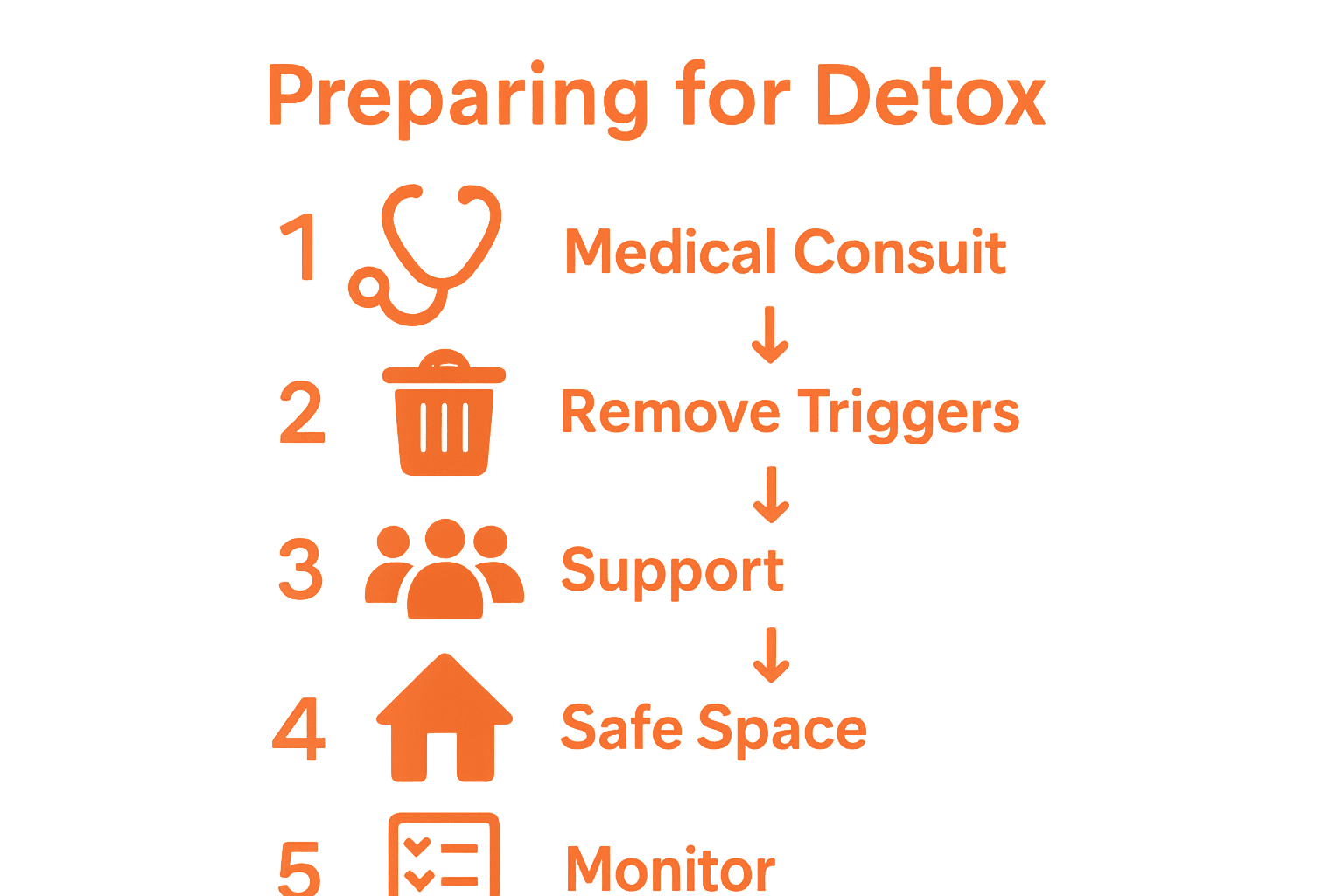
| Key Point | Explanation |
|---|---|
| 1. Consult a Medical Professional | Professional guidance ensures safety and effective detox tailored to your specific needs. |
| 2. Remove Triggers and Substances | Clear your environment of substances and emotional triggers to foster a safe recovery space. |
| 3. Arrange Supportive Resources | Build a strong support network of family, friends, and groups to aid during recovery. |
| 4. Set Up a Safe, Comfortable Space | Create a nurturing environment that encourages wellness and reduces the risk of relapse. |
| 5. Monitor Progress During Detox | Track your feelings and symptoms to understand your journey and seek help when needed. |
 |
|
Step 1: Consult a Medical Professional First
Starting your detox journey requires professional medical guidance to ensure your safety and success. According to researchers at fammed, consulting a medical professional is crucial to assess individual health conditions and potential risks before beginning any detoxification process.
Your initial consultation will help healthcare providers create a personalized detox strategy tailored to your specific needs. Medical experts can evaluate factors like your genetic makeup, current health status, and potential complications. As researchers from mtih explain, genetic variations can significantly impact how your body processes toxins, making professional assessment critical for safe and effective detoxification.
During your medical consultation, be prepared to discuss your full health history, current medications, substance use patterns, and any underlying medical conditions. Your healthcare provider might recommend specific tests, develop a customized detox plan, or suggest additional support services to help you navigate the detoxification process safely. This step is not just a formality but a fundamental component of a successful and healthy recovery journey.
Step 2: Remove Triggers and Substances
Successfully preparing for detox means systematically clearing your environment of substances and potential relapse triggers. According to SAMHSA, eliminating triggers and substances associated with previous substance use is vital for a successful detox process. This critical step helps create a safe and supportive recovery environment that minimizes temptation and potential setbacks.
Start by conducting a thorough inventory of your living space. Remove all alcohol, drugs, drug paraphernalia, and any items closely associated with your substance use. This might include specific glassware, hidden stashes, or personal items that remind you of past substance use. Consider asking a trusted friend or family member to help you complete this task if you find it emotionally challenging. The goal is to create a clean physical environment that supports your commitment to recovery.

Beyond physical items, you will also need to address social and emotional triggers. This means creating boundaries with people or social groups connected to your previous substance use. Inform close friends and family about your detox journey and request their support in maintaining a substance free environment. While this process can feel overwhelming, remember that each item you remove and each boundary you set is a powerful step toward reclaiming your health and building a new life free from addiction.
Step 3: Arrange Supportive Resources
Building a strong support network is fundamental to successful detoxification and long term recovery. According to SAMHSA, arranging supportive resources involves strategically connecting with friends, family, and support groups who can help you maintain sobriety and navigate the challenges of detoxification.
Start by identifying key people in your life who will offer genuine support during your recovery journey. This might include understanding family members, close friends who are committed to your health, or a sponsor from a recovery program. Consider joining local support groups like Alcoholics Anonymous or Narcotics Anonymous, where you can connect with others who understand your experience. Explore our guide to recovery support resources to help you develop a comprehensive support network that can provide emotional encouragement and practical assistance.
Remember that building a support system is not about quantity but quality. Focus on relationships that are positive, understanding, and aligned with your recovery goals. Be honest about your needs, set clear boundaries, and do not hesitate to ask for help when you need it. Your support network will be crucial in helping you stay motivated, accountable, and resilient throughout the detoxification process.
Step 4: Set Up a Safe, Comfortable Space
Creating a supportive physical environment is crucial for your detox journey. According to SAMHSA, establishing a safe and comfortable living space plays a critical role in supporting sobriety and minimizing potential relapse triggers. Your physical environment can significantly influence your mental and emotional state during the challenging detox process.
Begin by transforming your living space into a healing sanctuary. Remove any items that might remind you of past substance use and replace them with objects that promote wellness and relaxation. Consider adding calming elements like soft blankets, comfortable seating, healing plants, and soothing artwork. Create a dedicated area for self care activities such as meditation, journaling, or gentle exercise. Ensure your space is clean, organized, and free from clutter to help maintain a sense of mental clarity and emotional stability.
Pay special attention to your bedroom and personal spaces. Establish a consistent sleep routine by creating a comfortable sleeping environment with clean bedding, minimal electronic distractions, and perhaps some relaxing aromatherapy. Learn more about creating supportive recovery spaces to help you design an environment that nurtures your physical and emotional healing. Remember that your space should feel like a protective cocoon that supports your recovery journey one day at a time.
Step 5: Monitor Progress During Detox
Detoxification is a complex journey that requires careful and compassionate self monitoring. According to SAMHSA, tracking your progress effectively involves maintaining a support network and identifying potential challenges promptly to navigate the detox process successfully.
Begin by creating a daily journal or tracking system to document your physical and emotional experiences. Note symptoms, mood changes, triggers, and moments of strength. This personal record will help you understand your unique detox patterns and provide valuable insights for your healthcare providers. Learn more about understanding how detox works to gain deeper insights into your body’s healing process and what to expect during each stage.
Remember that monitoring progress is not about perfection but about compassionate self awareness. Be gentle with yourself during this challenging time. Reach out to your support network when you feel overwhelmed, celebrate small victories, and stay connected with medical professionals who can offer guidance and reassurance. Your commitment to tracking your journey demonstrates incredible strength and resilience in your path to recovery.
Start Your Detox Journey with Expert Support
Preparing for detox can feel overwhelming as you tackle challenges like removing triggers, setting up a safe space, and building a strong support system. The article highlights the importance of medical guidance, emotional support, and a carefully planned environment to ensure success. If you are ready to take control of your recovery and avoid setbacks, you need a team that understands every step of this process.
Healthy Life Recovery in San Diego offers medically supervised detox programs designed to keep you safe and comfortable while addressing your unique needs. Our compassionate staff combines evidence-based treatments with innovative therapies and supportive services to help you build the foundation for lasting sobriety. Don’t wait for uncertainty or triggers to stand in your way. Visit Healthy Life Recovery to learn how our comprehensive approach aligns with the steps essential for successful detox. Take the first step today and get the personalized care you deserve.
Frequently Asked Questions
How should I consult a medical professional before detox?
Starting your detox journey requires a thorough consultation with a healthcare provider. Prepare to discuss your health history, current medications, and any substance use to create a personalized detox strategy.
What are effective ways to remove triggers before starting detox?
To prepare for detox, conduct a thorough inventory of your living space and eliminate all substances and items that remind you of past usage. Aim to remove alcohol, drugs, and any paraphernalia associated with your substance use to create a supportive recovery environment.
How can I build a supportive network for my detox process?
Identify and connect with friends, family, and support groups who will genuinely support your recovery. Focus on building quality relationships that can provide emotional encouragement and practical assistance throughout your detox journey.
What should I include in my safe and comfortable detox space?
Create a healing environment by removing items related to substance use and adding calming elements like soft blankets, plants, and soothing artwork. Designate a specific area for self-care activities to enhance your comfort during the detox process.
How can I effectively monitor my progress during detox?
Maintain a daily journal to document your physical and emotional experiences, noting any symptoms, mood changes, and triggers. Use this record as a reflection tool to understand your detox patterns and to communicate effectively with your support network.
How can I set realistic goals for my detox journey?
Establish achievable, measurable goals for your detox process, focusing on both physical and emotional milestones. For instance, aim to track your progress daily and recognize small victories, celebrating each step taken within your overall recovery plan.
Recommended
- Private Alcohol Detox in San Diego, CA | Single Rooms
- How to Start Detox Safely: A Step-by-Step Guide | Healthy Life Recovery
- What is the M367 Pill? | Uses, Side Effects, & Risks
- Can You Detox From Alcohol at Home? When Is It Safe
- How to Detox Naturally: A Complete Step-by-Step Guide – Mahoney inter