
Most people think rehab is just about quitting drugs or alcohol, but the truth is much broader. Nearly 21 million Americans struggle with addiction each year, yet only a small fraction receive proper help. Understanding what rehabilitation really means can clear away common myths and empower you or your loved ones to seek the right support. This article sheds light on the real purpose of rehab and tackles misunderstandings that might hold you back from recovery.
Key Takeaways
| Point | Details |
|---|---|
| Personalized Rehabilitation | Rehabilitation is a tailored journey that combines various therapeutic approaches to address individual needs in overcoming substance use disorders and mental health challenges. |
| Types of Rehab Programs | There are multiple rehab options—outpatient, residential/inpatient, and intensive outpatient—that cater to different levels of addiction severity and personal recovery goals. |
| Structured Rehab Process | The recovery journey involves distinct stages, including assessment, detoxification, primary treatment, skill building, and aftercare, all aimed at supporting sustainable healing. |
| Evidence-Based Treatments | Modern rehabilitation incorporates innovative, evidence-based therapies like CBT and DBT, alongside holistic approaches to promote comprehensive recovery. |
Defining Rehab: Purpose and Common Misconceptions
Rehabilitation represents a comprehensive healing journey designed to help individuals overcome substance use disorders and mental health challenges. According to SAMHSA, rehabilitation is not a one-size-fits-all solution but a personalized approach addressing individual treatment needs across various programs and support services.
At its core, rehabilitation focuses on skill development and recovery strategies that go far beyond simple detoxification. As Maryland Health explains, rehabilitation programs aim to enable individuals to function effectively in their least restrictive environment possible through targeted therapies like occupational and recreational interventions.
Common misconceptions about rehab often prevent people from seeking the help they need. Many individuals mistakenly believe rehabilitation is only about stopping substance use or that treatment looks the same for everyone. In reality, modern rehabilitation programs are nuanced, combining medical treatment, psychological support, skill-building, and personalized recovery tracks that address underlying mental health conditions and personal challenges.
Key aspects of comprehensive rehabilitation typically include:
- Medical detoxification
- Individual and group therapy
- Mental health counseling
- Skill-building workshops
- Relapse prevention strategies
- Holistic wellness approaches
Choosing rehabilitation is a courageous first step toward reclaiming your life and health. Myths about Rehab can be powerful barriers, but understanding the true nature of rehabilitation helps individuals make informed, empowering decisions about their recovery journey.
Types of Rehab Programs Explained
Substance addiction treatment offers multiple pathways to recovery, each designed to meet unique individual needs and circumstances. According to SAMHSA, rehabilitation programs vary widely, including outpatient services, inpatient care, and residential treatment, ensuring comprehensive support for individuals struggling with substance use disorders.
Rehabilitation programs can be broadly categorized into three primary approaches. Massachusetts Health highlights that these services encompass 24-hour diversionary services, residential treatment, and recovery homes, each strategically tailored to support individuals at different stages of their recovery journey.
Each rehabilitation program offers distinct features and benefits:
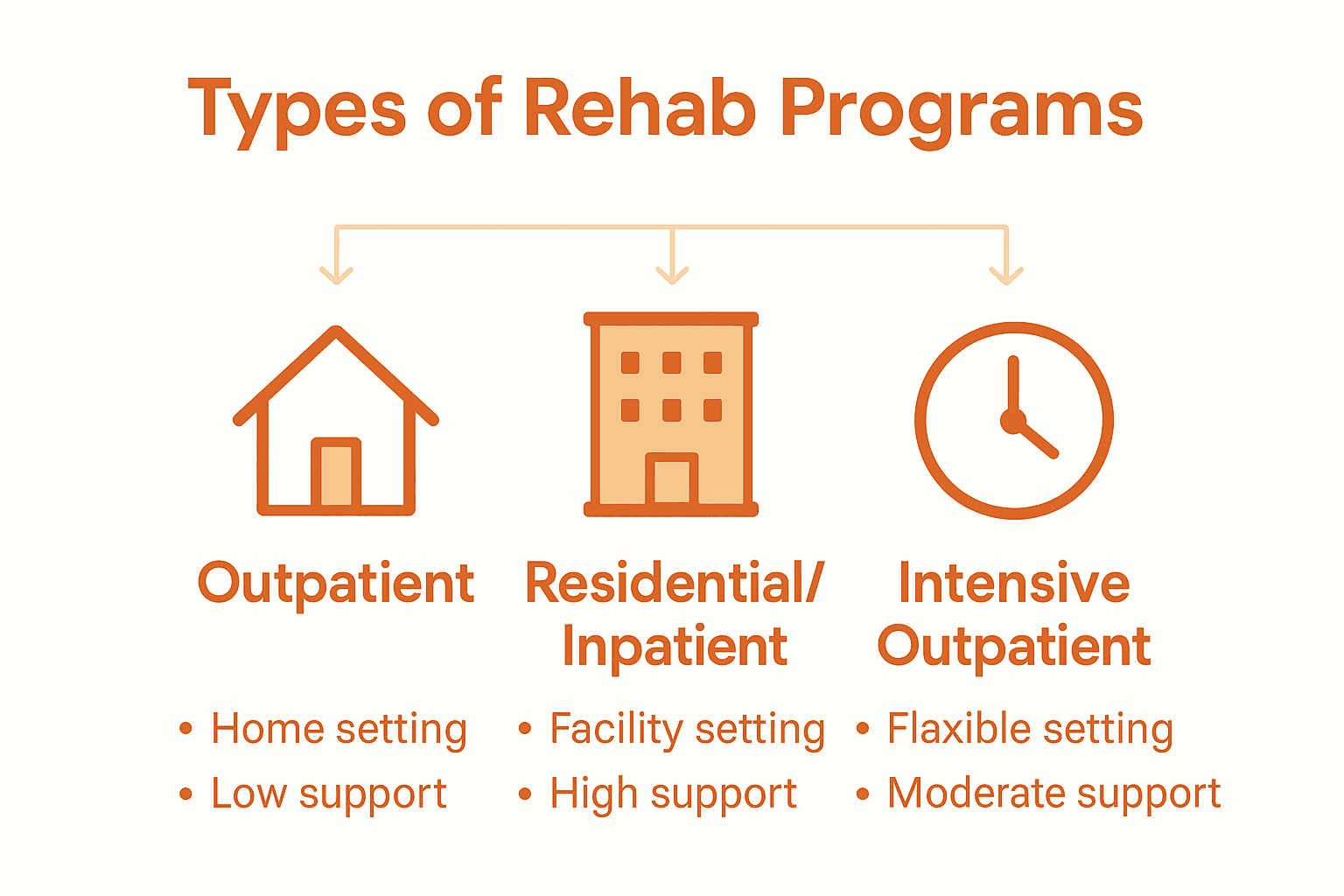
Here’s a comparison of the main types of rehab programs:
| Program Type | Setting | Support Level | Ideal For |
|---|---|---|---|
| Outpatient | Home-based | Scheduled sessions | Mild-moderate cases Work/family balance |
| Residential/Inpatient | Live-in facility | 24/7 medical/mental | Severe addiction Complex needs |
| Intensive Outpatient (IOP) | Flexible, part-time | Structured, frequent sessions | Step-down care Transition phase |
- Outpatient Programs
- Allows individuals to maintain daily responsibilities
- Provides structured treatment while living at home
- Flexible scheduling for work and family commitments
- Lower cost compared to residential treatment
- Residential/Inpatient Treatment
- 24/7 medical and psychological support
- Immersive recovery environment
- Intensive therapy and skill-building
- Ideal for severe addiction or complex mental health needs
- Intensive Outpatient Programs (IOP)
- Structured treatment with more flexibility
- Group and individual counseling
- Supports gradual reintegration into daily life
- Bridges gap between outpatient and residential care
Choosing the right rehabilitation program depends on individual circumstances, addiction severity, and personal recovery goals. What Is Rehab? Complete Guide to Recovery Programs can provide additional insights into making an informed treatment decision tailored to your specific needs.
Step-By-Step Rehab Process Journey
Recovery is a structured journey with carefully designed stages that support individuals through their healing process. According to NAATP, the rehabilitation process follows a comprehensive continuum of care that systematically addresses the complex needs of individuals struggling with substance use disorders.
Indian Health Services outlines the typical progression of substance abuse treatment, which begins with critical intervention and assessment stages. The journey typically unfolds through several interconnected phases, each building upon the previous one to create a holistic path toward sustainable recovery.
The rehabilitation journey typically includes these key stages:

- Initial Consultation and Assessment
- Comprehensive medical and psychological evaluation
- Determining individual treatment needs
- Creating personalized recovery strategy
- Identifying underlying mental health conditions
- Medical Detoxification
- Medically supervised withdrawal management
- Managing physical symptoms of substance dependence
- Ensuring patient safety during withdrawal
- Preparing for ongoing treatment
- Primary Treatment Phase
- Intensive individual and group therapy
- Addressing psychological aspects of addiction
- Learning coping mechanisms
- Developing relapse prevention skills
- Rehabilitation and Skill Building
- Rebuilding personal and professional life skills
- Establishing healthy relationships
- Developing stress management techniques
- Exploring personal growth opportunities
- Aftercare and Ongoing Support
- Continued counseling and support groups
- Gradual reintegration into daily life
- Maintaining long-term recovery strategies
- Preventing potential relapse
Understanding the nuanced stages of addiction can provide deeper insights into how rehabilitation supports individuals through each critical phase of their recovery journey.
Evidence-Based Therapies and Innovative Treatments
Addiction recovery has evolved beyond traditional approaches, embracing a comprehensive range of evidence-based therapies and cutting-edge treatments. According to Tremor Action, effective drug addiction treatment now incorporates innovative approaches that address both psychological and physiological aspects of addiction, combining proven therapeutic techniques with emerging scientific insights.
National Depression Hotline highlights the importance of integrating structured support with flexible treatment options. Modern rehabilitation programs now utilize a multi-dimensional approach that goes beyond traditional counseling, leveraging advanced therapeutic interventions to support holistic healing.
Key evidence-based therapies and innovative treatments include:
- Cognitive Behavioral Therapy (CBT)
- Identifies negative thought patterns
- Develops coping strategies
- Addresses underlying psychological triggers
- Helps prevent potential relapse
- Dialectical Behavior Therapy (DBT)
- Teaches emotional regulation skills
- Improves interpersonal relationships
- Supports mindfulness practices
- Helps manage intense emotional experiences
- Mindfulness-Based Interventions
- Reduces stress and anxiety
- Enhances self-awareness
- Promotes emotional balance
- Supports long-term recovery
- Innovative Neurological Treatments
- Brain mapping techniques
- Transcranial magnetic stimulation
- Neurofeedback therapies
- Advanced psychological assessments
For those interested in understanding how specific therapeutic approaches can support recovery, our Cognitive Behavioral Therapy in Recovery guide offers deeper insights into this transformative treatment approach.
Choosing Rehab: Costs, Insurance, and Aftercare
Selecting the right rehabilitation program requires careful consideration of multiple critical factors. According to Methadone.org, choosing a rehab facility involves thoroughly assessing accreditation, licensing, program types, treatment approaches, and comprehensive support services to ensure the most effective recovery pathway.
The financial aspect of rehabilitation can feel overwhelming, but multiple options exist to make treatment accessible. Understanding insurance coverage, exploring payment plans, and identifying potential financial assistance programs are crucial steps in accessing the care you need. Some rehabilitation centers offer sliding scale fees, scholarships, or flexible payment arrangements to help individuals overcome financial barriers to treatment.
Key considerations when selecting a rehabilitation program include:
- Treatment Program Evaluation
- Verify facility accreditation
- Check treatment success rates
- Review therapeutic approaches
- Assess staff credentials
- Financial Considerations
- Understand insurance coverage
- Explore payment plans
- Check for financial assistance options
- Evaluate total treatment costs
- Insurance Navigation
- Verify in-network providers
- Understand coverage limits
- Request detailed insurance verification
- Explore additional financial resources
- Aftercare Planning
- Assess ongoing support services
- Review relapse prevention strategies
- Check availability of support groups
- Evaluate long-term recovery resources
How to Pay for Rehab provides comprehensive guidance on navigating the financial aspects of addiction treatment, helping you make an informed decision about your recovery journey.
Take Control of Your Recovery Journey Today
Understanding how rehab works is the first courageous step toward overcoming addiction and rebuilding your life. The article highlights the challenges many face such as managing complex treatment stages, addressing co-occurring mental health issues, and finding personalized therapy approaches like Cognitive Behavioral Therapy or innovative treatments including brain mapping. At Healthy Life Recovery, we recognize that each individual’s path is unique, which is why we offer a full continuum of care designed to meet your specific needs from medically supervised detox to supportive sober living.
Don’t let myths or uncertainty hold you back. Discover how our evidence-based therapies combined with dynamic Active Recovery Tracks like yoga and fitness can empower your healing process. If you’re ready to find compassionate care that understands your journey and supports you every step of the way, visit Healthy Life Recovery. Learn more about what rehab truly involves at How Rehab Works: Complete Guide and take that next step towards a happy, healthy life free from addiction. Your recovery starts now—reach out and begin your transformation today.
Frequently Asked Questions
What is the purpose of rehabilitation?
Rehabilitation aims to help individuals overcome substance use disorders and mental health challenges through a personalized approach that addresses their unique treatment needs.
What are the different types of rehab programs available?
Rehab programs can be categorized into outpatient programs, residential/inpatient treatment, and intensive outpatient programs (IOP), each tailored to meet individual needs and circumstances.
What stages are involved in the rehab process?
The rehabilitation process typically includes initial consultation, medical detoxification, primary treatment, rehabilitation and skill building, and aftercare support to ensure sustainable recovery.
What types of therapies are used in rehab?
Modern rehabilitation incorporates evidence-based therapies such as Cognitive Behavioral Therapy (CBT), Dialectical Behavior Therapy (DBT), mindfulness-based interventions, and innovative neurological treatments to address addiction effectively.