


Over 60 percent of people leaving rehab relapse within the first year without strong ongoing support. Recovery can feel isolating, but sober communities change that experience by offering a safe place and real connections. These groups do more than keep substances out—they build accountability, life skills, and hope. If you want lasting recovery and a sense of belonging, understanding sober communities is the first step to a healthier future.
Key Takeaways
| Point | Details |
|---|---|
| Sober Communities Support Recovery | These environments provide structured, substance-free living spaces that enhance long-term recovery and reintegration into society. |
| Core Features Promote Growth | Key elements include peer support, structured routines, and skill development, which together foster personal accountability and recovery agency. |
| Mental Health Benefits | Sober communities significantly reduce isolation and improve emotional well-being, supporting individuals in developing self-esteem and healthy relationships. |
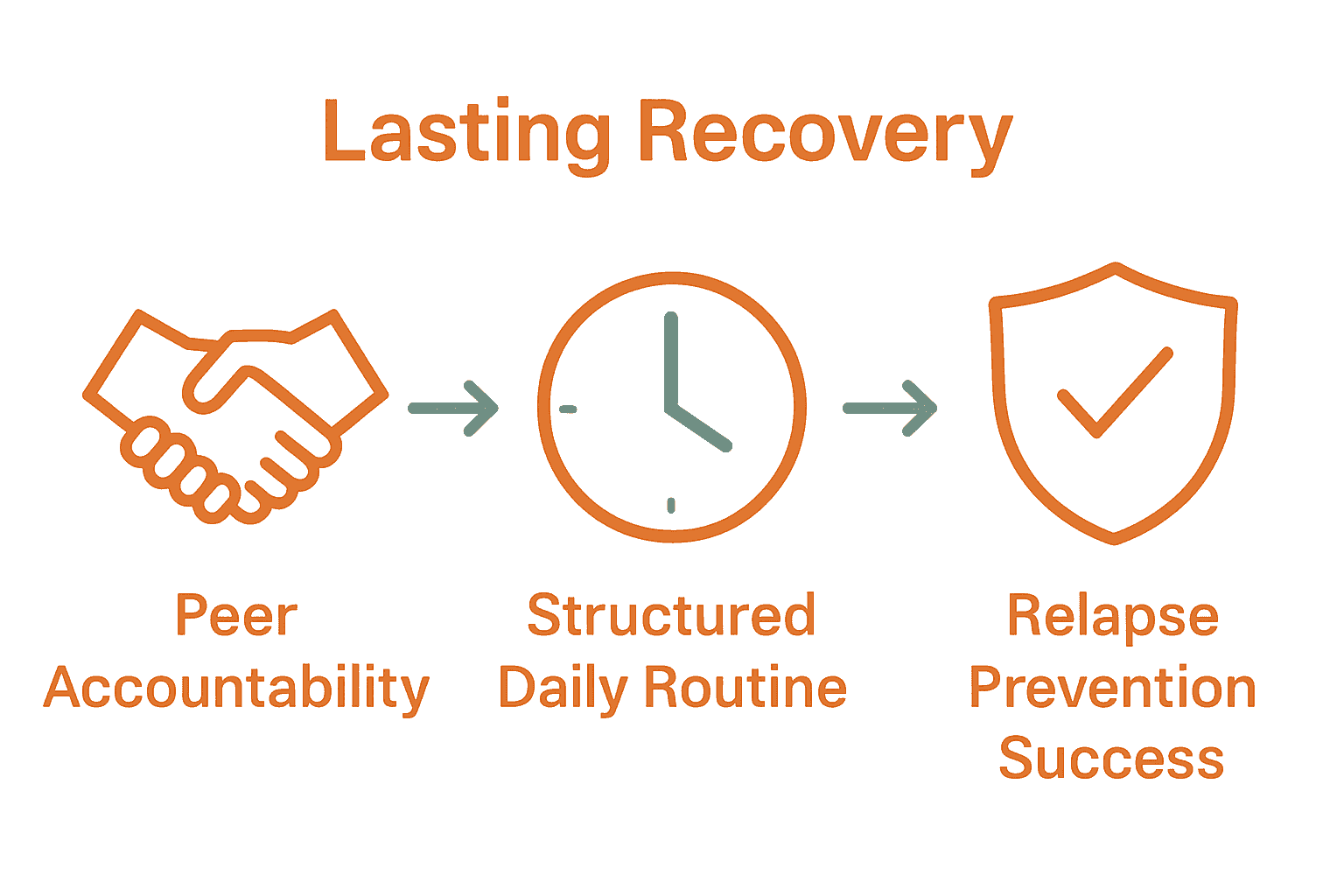
| Relapse Prevention Strategies | Effective sober living programs implement accountability mechanisms, such as regular meetings and peer check-ins, to deter substance use and encourage personal responsibility. |
What Are Sober Communities? Core Concepts
Sober communities represent structured, supportive environments designed to help individuals recovering from substance use disorder maintain their sobriety and rebuild their lives. According to Wikipedia, these are alcohol and drug-free living spaces that serve as critical transitional environments between rehabilitation programs and mainstream society, providing safe housing and structured living conditions.
At their core, sober communities are more than just physical spaces – they are social networks built on mutual support, shared experiences, and collective commitment to recovery. These communities create a protective ecosystem where individuals can heal, develop new life skills, and gradually reintegrate into society without the immediate pressures and triggers that might compromise their recovery journey. Unlike traditional treatment settings, sober communities offer long-term support that extends well beyond initial rehabilitation.
The fundamental principles of sober communities typically include:
- Zero tolerance for substance use
- Regular accountability checks
- Peer support and group meetings
- Structured daily routines
- Skill-building and personal development opportunities
- Emotional and psychological support
As Wikipedia highlights, some sober communities like Secular Organizations for Sobriety (SOS) emphasize rational decision-making and self-empowerment, offering alternative approaches to recovery that focus on personal agency and mutual support rather than spiritual frameworks. These communities recognize that sustainable recovery is not just about abstaining from substances, but about creating meaningful, fulfilling lives that make sobriety not just possible, but desirable.
By providing a safe, structured environment with continuous support, sober communities dramatically increase an individual’s chances of long-term recovery and successful reintegration into society. They transform isolation and struggle into connection, hope, and collective healing.
Types of Sober Living Environments in San Diego
Sober living environments in San Diego offer diverse options for individuals seeking structured recovery support. Second Chance Program provides an excellent example, operating five supervised, substance-free homes strategically located in quiet residential neighborhoods that provide comprehensive support for individuals in recovery.
The primary types of sober living environments in San Diego typically include:
- Transitional Housing Programs
- Peer-Led Sober Living Homes
- Group Recovery Residences
- Supportive Independent Living Communities
- Structured Therapeutic Housing
Transitional housing programs serve as critical stepping stones for individuals moving from intensive rehabilitation into independent living. These environments offer supervised settings with clear rules and expectations, helping residents develop essential life skills and maintain sobriety. As Second Chance Program demonstrates, these homes often provide practical amenities like shared rooms, full kitchen facilities, laundry access, and proximity to public transportation and recovery meeting locations.
Peer-led sober living homes represent another crucial model, where residents with shared recovery experiences support each other’s ongoing sobriety journey. These communities emphasize mutual accountability, shared responsibilities, and collective healing. Unlike traditional treatment facilities, these environments focus on long-term personal growth, helping individuals rebuild their lives through structured yet compassionate community support.
Choosing the right sober living environment depends on individual needs, recovery stage, and personal goals.
 San Diego offers a range of options designed to provide safe, supportive spaces where individuals can continue their recovery, develop new life skills, and gradually reintegrate into society with confidence and resilience.
Key Features That Support Lasting Recovery
Sober living environments incorporate several critical features designed to support sustainable recovery and personal transformation. Oxford House exemplifies an innovative approach, demonstrating how structured living spaces can create powerful foundations for long-term sobriety through democratic self-governance and mutual accountability.
Key features that distinguish effective sober communities include:
- Zero tolerance for substance use
- Structured daily routines
- Peer support networks
- Skill development opportunities
- Financial responsibility training
- Continuous personal accountability
The principle of self-governance plays a crucial role in recovery. As LifeRing Secular Recovery emphasizes, successful recovery programs empower individuals to develop personalized strategies that promote secularity, sobriety, and self-empowerment. This approach moves beyond traditional treatment models by encouraging residents to take active ownership of their recovery journey, creating a sense of personal agency and motivation.
Financial self-sufficiency represents another fundamental feature of sustainable sober living. Programs like Oxford House integrate expense sharing and financial management skills, teaching residents practical life skills that support long-term independence. By creating environments that balance structure with personal responsibility, these communities help individuals rebuild their lives, develop critical coping mechanisms, and create sustainable pathways to recovery.
Ultimately, the most successful sober living environments are those that recognize recovery as a holistic process. They provide more than just a substance-free living space – they offer a comprehensive support system that addresses emotional, psychological, and practical challenges of rebuilding one’s life after addiction.
Mental Health and Social Support Benefits
Sober communities provide transformative mental health and social support that goes far beyond simply abstaining from substances. Women for Sobriety demonstrates how targeted recovery approaches can fundamentally reshape an individual’s self-perception and emotional landscape, offering structured pathways to psychological healing and personal growth.
The key mental health and social support benefits include:
- Reduced feelings of isolation
- Improved emotional regulation
- Enhanced self-esteem and personal worth
- Development of healthy interpersonal skills
- Consistent emotional accountability
- Professional and peer-based psychological support
Recovery communities create powerful social ecosystems that address the complex psychological challenges of addiction. By providing safe spaces for vulnerability and connection, these environments help individuals rebuild their sense of self-worth and develop meaningful relationships. Sobering centers illustrate this approach by offering immediate social support that goes beyond traditional medical interventions, creating alternatives that prioritize human dignity and compassionate care.
The psychological transformation within sober communities is profound. Participants learn to replace destructive thought patterns with constructive coping mechanisms, developing emotional intelligence and resilience. These support networks provide continuous validation, helping individuals recognize their inherent worth beyond their substance use history and creating sustainable pathways for mental and emotional recovery.
Ultimately, the most powerful aspect of these support systems is their holistic approach. They don’t just treat addiction as a medical condition, but as a complex human experience requiring comprehensive emotional, social, and psychological rehabilitation. By addressing underlying mental health challenges and providing consistent, judgment-free support, sober communities offer hope and genuine opportunities for transformative personal growth.
Relapse Prevention and Accountability Mechanisms
Sober communities develop sophisticated strategies to prevent relapse and maintain individual accountability. Oxford House exemplifies an innovative approach through its rigorous mechanisms of peer support and structured governance, implementing a zero-tolerance policy that creates a powerful deterrent against potential substance use.
Key relapse prevention mechanisms include:
- Regular group accountability meetings
- Mandatory substance screening
- Peer support check-ins
- Individual recovery planning
- Immediate intervention protocols
- Consequence-based management systems
LifeRing Secular Recovery emphasizes the importance of self-empowerment in maintaining long-term sobriety. Their approach focuses on developing personalized recovery strategies that encourage individuals to take active responsibility for their healing journey. This method recognizes that sustainable recovery stems from internal motivation and community support, rather than external enforcement.
The most effective accountability mechanisms create a balanced environment of support and personal responsibility. By establishing clear expectations, providing consistent feedback, and offering compassionate intervention strategies, sober communities transform potential relapse triggers into opportunities for growth and recommitment to recovery. These systems work not by punishment, but by helping individuals understand their patterns, develop healthier coping mechanisms, and rebuild trust in themselves and their support network.
Ultimately, successful relapse prevention is about creating a comprehensive ecosystem of support. It involves continuous learning, emotional intelligence development, and building resilient personal and social networks that can withstand the complex challenges of recovery.
Discover the Strength of Sober Communities with Healthy Life Recovery
The journey to lasting sobriety is often filled with challenges such as overcoming isolation, maintaining accountability, and building new life skills. This article highlights how structured sober communities provide essential support through peer networks, zero tolerance for substance use, and emotional healing. If you are seeking a safe, supportive environment that aligns with these proven recovery principles, Healthy Life Recovery in San Diego offers tailored solutions. Our comprehensive drug and alcohol rehab programs, including medically supervised detox and engaging sober living options, empower you to rebuild your life with compassion and expertise.
Start transforming your recovery experience today by exploring our full range of evidence-based therapies and innovative treatment tracks at Healthy Life Recovery. Whether you are transitioning from inpatient care or looking for supportive housing to sustain your sobriety, find out how our caring team can help you develop the skills and confidence needed for long-term success. Take the important first step towards a happier and healthier life now by visiting Healthy Life Recovery Sober Living Options and connecting with us for personalized support.
Frequently Asked Questions
What are sober communities?
Sober communities are supportive environments designed to help individuals recovering from substance use disorder maintain their sobriety and reintegrate into society. They provide structured living spaces that promote healing and personal development.
How do sober living environments assist in relapse prevention?
Sober living environments implement various relapse prevention mechanisms, including regular group accountability meetings, mandatory substance screenings, and peer support check-ins, helping residents maintain sobriety through community support and personal responsibility.
What features distinguish effective sober communities?
Effective sober communities typically include zero tolerance for substance use, structured daily routines, peer support networks, skill development opportunities, and financial responsibility training, all aimed at fostering personal growth and sustainable recovery.
What mental health benefits do sober communities provide?
Sober communities offer mental health benefits such as reduced feelings of isolation, improved emotional regulation, enhanced self-esteem, and the development of healthy interpersonal skills, promoting a supportive environment for psychological healing.
Recommended
- Why Sober Living Matters: Complete Guide for Recovery | Healthy Life Recovery
- Understanding the Benefits of Sober Living for Recovery | Healthy Life Recovery
- Sober Living Environments Explained: Complete Guide | Healthy Life Recovery
- Understanding Types of Sober Living for Recovery | Healthy Life Recovery