


Sober living homes often seem like just another stop on the recovery journey and yet their impact runs surprisingly deep. Nearly 68 percent of residents in sober living environments remain abstinent after 18 months, which flips a common misconception on its head. Instead of being a short-term fix, these homes act as powerful launchpads for real and lasting change.
Quick Summary
| Takeaway | Explanation |
|---|---|
| Sober living provides structured support for recovery. | It offers a safe environment for individuals to transition from treatment to independent living, emphasizing accountability and personal growth. |
| Peer support is vital in sober living. | Living with others who share similar experiences fosters understanding and creates a supportive community that aids recovery. |
| Life skills development is a key focus. | Sober living environments teach essential skills like financial management and healthy communication, essential for long-term sobriety. |
| Structured routines reduce relapse risks. | Consistent daily schedules help residents build discipline and coping mechanisms, which are crucial for maintaining sobriety. |
| Holistic strategies address psychological needs. | Beyond abstinence, sober living prioritizes rebuilding self-esteem and relationships, crucial for a comprehensive recovery process. |
What is Sober Living and Its Purpose?
Sober living represents a critical transitional phase in addiction recovery, providing individuals with a structured and supportive environment designed to help them maintain sobriety and rebuild their lives after formal treatment. Research from the National Institute on Drug Abuse indicates that these residences serve as a crucial bridge between intensive treatment programs and independent living.
A Safe Haven for Recovery
Sober living houses offer more than just a place to reside. They create a protective environment where individuals in recovery can develop essential life skills, practice accountability, and establish healthy routines away from triggers that might compromise their sobriety. Unlike traditional rehabilitation facilities, these homes emphasize personal responsibility and community support.
Key characteristics of sober living environments include:
- Mandatory sobriety and regular drug testing
- Structured daily schedules and house rules
- Peer support and mutual accountability
- Opportunities for skill development and personal growth
Psychological and Practical Benefits
The benefits of sober living extend beyond physical abstinence. These environments provide psychological reinforcement by surrounding residents with peers who understand their recovery journey. Learn more about types of sober living support that can help individuals rebuild their lives systematically.
Residents learn to navigate real-world challenges while maintaining a supportive network, which significantly reduces the risk of relapse. By creating a controlled yet empowering space, sober living houses help individuals gradually rebuild confidence, establish healthy relationships, and develop the resilience needed for long-term recovery.
Below is a table that summarizes the core characteristics and benefits of sober living environments discussed in the article.
| Feature/Characteristic | Description |
|---|---|
| Mandatory Sobriety | Residents are required to maintain abstinence and undergo regular drug testing. |
| Structured Daily Schedules | Consistent routines and house rules foster discipline and accountability. |
| Peer Support | Residents live with others in recovery, providing emotional and motivational support. |
| Life Skills Development | Opportunities to learn financial management, communication, and other essential life skills. |
| Accountability | Residents help keep each other accountable and are responsible for their actions. |
| Gradual Reintegration | Sober living acts as a bridge between treatment and independent living, aiding successful transition. |
| Holistic Recovery Focus | Emphasis on psychological well-being, personal growth, and healthy relationships for long-term change. |
Why Sober Living Matters for Recovery
Sober living plays a pivotal role in the addiction recovery process, serving as a critical intervention strategy that significantly improves long-term recovery outcomes. Research from the National Institute on Drug Abuse demonstrates that structured transitional environments dramatically enhance an individual’s ability to maintain sobriety and rebuild their life.
Breaking the Cycle of Addiction
Recovery is not a linear journey, and sober living addresses this complexity by providing a comprehensive support system that extends beyond traditional treatment methods. These environments recognize that addiction is a chronic condition requiring ongoing management and strategic interventions.
Key reasons sober living matters include:
- Reducing immediate relapse risks
- Creating structured accountability
- Developing essential life and coping skills
- Providing a supportive peer community
- Facilitating gradual reintegration into society
Psychological and Social Rehabilitation
Beyond physical abstinence, sober living environments focus on holistic rehabilitation. Learn more about recovery strategies that address the complex psychological and social dimensions of addiction. These homes help individuals rebuild self-esteem, repair relationships, and develop healthy communication and problem-solving skills.
The structured yet compassionate approach of sober living acknowledges that recovery extends far beyond simply stopping substance use. By creating a supportive ecosystem that promotes personal growth, accountability, and gradual independence, these environments offer individuals the best possible foundation for sustainable, long-term recovery.
How Sober Living Environments Support Change
Sober living environments represent a dynamic framework for personal transformation, offering more than just a substance-free residence. Research from the National Institutes of Health reveals these spaces are intentionally designed to facilitate comprehensive behavioral and psychological change through structured support and community engagement.
Structured Personal Development
These environments create a systematic approach to recovery by implementing carefully crafted mechanisms that promote individual growth. The structured nature of sober living goes beyond simple abstinence, focusing on developing critical life skills, emotional regulation, and personal accountability.
Key mechanisms of change include:
- Establishing consistent daily routines
- Providing peer-supported accountability
- Teaching financial management skills
- Encouraging professional and educational development
- Facilitating healthy interpersonal relationship building
Psychological Transformation Strategies
Sober living houses employ sophisticated psychological strategies that support fundamental personal change. Learn more about recovery support strategies that help individuals rebuild their lives from the ground up.
By creating a supportive yet challenging environment, these programs help residents develop intrinsic motivation, rebuild self-esteem, and learn critical coping mechanisms. The communal aspect of sober living ensures that individuals are not isolated in their recovery journey but are surrounded by peers who understand their challenges and can provide genuine, empathetic support.
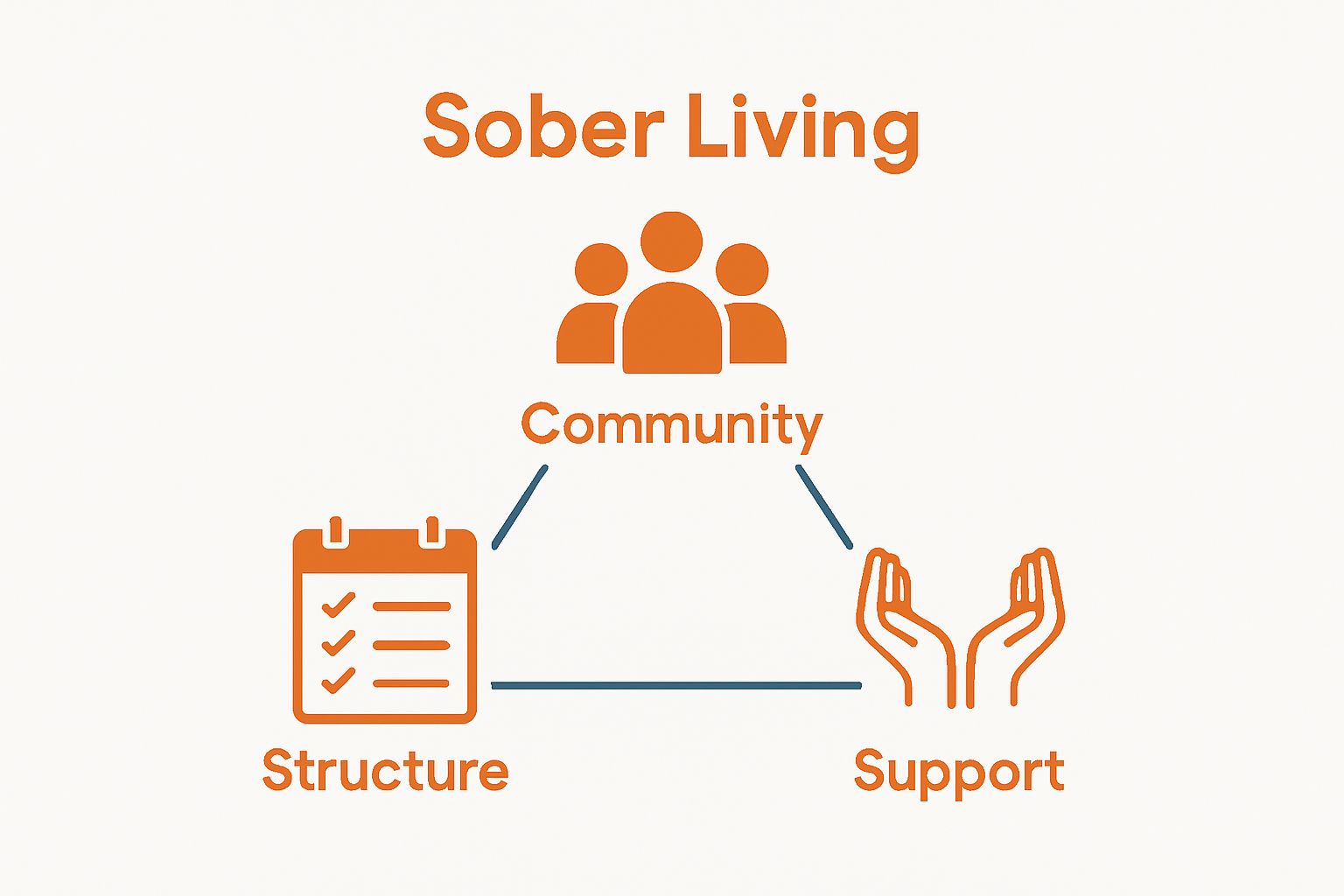
Key Concepts: Community, Structure, and Support in Sober Living
Sober living environments are built on three foundational pillars that collectively create a powerful framework for sustainable recovery. Research from addiction recovery experts demonstrates how these interconnected elements work synergistically to support individuals transitioning from treatment to independent living.
The Power of Structured Community
Community represents the heart of successful sober living, providing individuals with a network of peers who understand the complexities of addiction recovery.
 This shared experience creates a unique environment of mutual understanding, accountability, and genuine support that goes beyond traditional treatment models.
Key aspects of community in sober living include:
- Shared lived experiences with addiction
- Collective commitment to personal growth
- Peer-driven accountability and motivation
- Emotional and practical support systems
- Opportunities for social reconnection
Systematic Support and Personal Transformation
Structure and support are essential components that transform sober living from a mere residence into a comprehensive recovery ecosystem. Explore our approach to recovery support that emphasizes holistic personal development.
These environments provide carefully designed frameworks that guide residents through consistent routines, skill-building activities, and therapeutic interventions. By creating predictable yet challenging environments, sober living homes help individuals rebuild self-discipline, develop healthy coping mechanisms, and gradually reconstruct their personal and professional lives with consistent, compassionate guidance.
This table compares the three foundational pillars of sober living environments as outlined in the article, showing how each supports the recovery process.
| Pillar | Role in Recovery |
|---|---|
| Community | Provides shared experiences, peer-driven accountability, emotional support, and social renewal |
| Structure | Delivers consistent routines, skill-building opportunities, and reliable frameworks for growth |
| Support | Ensures compassionate guidance, access to resources, and reinforces personal transformation |

Take the Next Step Toward Lasting Recovery with Healthy Life Recovery
Are you struggling to find stability after residential treatment or worried about facing real-world triggers alone? The article highlighted the importance of structured sober living, a supportive environment, and strong peer accountability for successful long-term recovery. If you want a transition that is safe, empowering, and helps you rebuild your life with a community by your side, Healthy Life Recovery is here to guide you.
Our sober living solutions in San Diego blend evidence-based care, real community, and comprehensive support. We address your unique challenges with compassionate staff, innovative therapies, and engaging recovery tracks like fitness and wellness programs. Discover how easy it is to move forward confidently when you have the right support system behind you. Learn more about our sober living support and the full range of recovery services to help you reclaim your independence now. Ready to experience a stronger, healthier future? Visit Healthy Life Recovery to connect with our team and take control of your next chapter today.
Frequently Asked Questions
What are the main benefits of sober living for recovery?
The main benefits of sober living include a supportive community, structured routines, and opportunities for personal growth. To maximize these benefits, consider actively participating in house activities and engaging with peers for accountability.
How does sober living help reduce the risk of relapse?
Sober living environments provide accountability through peer support and regular drug testing. To lower your relapse risk, immerse yourself in the community activities and open discussions, fostering emotional ties with supportive peers.
What skills can I develop while living in a sober house?
While living in a sober house, you can develop essential life skills such as financial management, emotional regulation, and interpersonal communication. To effectively build these skills, engage in the structured programs offered at the facility, which may include workshops and group therapy sessions.
How does the structure of sober living contribute to personal transformation?
The structure in sober living creates consistent routines that promote discipline and accountability, essential for long-term recovery. To benefit from this structure, adhere to daily schedules and participate in skill-building activities designed to challenge and foster your growth.
What role does community play in sober living?
Community in sober living provides emotional support, shared experiences, and motivation from peers facing similar challenges. To leverage this community, attend house meetings and social events, connecting with others to strengthen your recovery network.
How long should I stay in a sober living home for maximum benefit?
The ideal length of stay in a sober living home varies for each person but typically ranges from 30 to 90 days or more. To determine your optimal duration, regularly assess your comfort level and readiness to transition back to independent living while maintaining your sobriety.