


Nearly one in ten adults in the United States struggles with a substance use disorder, showing just how widespread the need for effective recovery support is. The path to lasting sobriety is rarely straightforward, and for many, staying on track depends on having clear structure and reliable guidance. A well-crafted addiction recovery checklist provides that sense of direction, offering practical steps and support strategies that empower individuals and families to make steady, meaningful progress.
Key Takeaways
| Point | Details |
|---|---|
| Personalized Recovery Plans | An effective addiction recovery checklist must be tailored to individual needs, encompassing medical assessments, therapy, and relapse prevention. |
| Stages of Recovery | The recovery process consists of cyclical stages, including recognition, detoxification, and ongoing personal development, each requiring unique strategies. |
| Support Systems Importance | Establishing a robust support network is crucial, involving professional counseling, peer groups, and comprehensive resources for holistic recovery. |
| Relapse Prevention Strategies | Early detection of warning signs and implementing proactive strategies are essential for maintaining long-term sobriety and managing potential relapses. |
Defining an Addiction Recovery Checklist
An addiction recovery checklist is a structured, personalized roadmap designed to guide individuals through the complex journey of overcoming substance use disorders. According to the CDC, such checklists provide critical frameworks for healthcare providers and patients to systematically address treatment, support, and long-term wellness goals.
At its core, an addiction recovery checklist serves multiple essential functions. It helps individuals track progress, maintain accountability, and create a sense of structure during a challenging healing process. These checklists typically include comprehensive elements like medical assessment, treatment program engagement, therapy participation, support group involvement, and personal wellness strategies. The goal is not just abstinence, but holistic recovery that addresses physical, psychological, and social dimensions of addiction.
Key components of an effective addiction recovery checklist often include:
- Initial medical and psychological assessment
- Detoxification planning
- Treatment program selection
- Individual and group therapy commitment
- Medication management (if applicable)
- Support network development
- Relapse prevention strategies
- Ongoing health and wellness monitoring
The addiction recovery journey is unique for every individual, which means no single checklist works identically for everyone. Personalization becomes crucial, allowing individuals to adapt their recovery plan to their specific needs, challenges, and strengths. What remains consistent is the commitment to progressive healing and the understanding that recovery is a continuous, dynamic process of personal transformation.
Essential Recovery Steps and Stages
Recovery from substance use disorders involves a deliberate, multifaceted progression through several critical stages that demand commitment, self-awareness, and consistent effort. According to Addictions and Recovery, individuals navigating recovery must focus on developing essential skills and achieving specific goals during their first year, particularly around accepting their addiction and practicing radical honesty.
The recovery journey typically encompasses several interconnected stages that build upon each other. These stages are not linear but represent a cyclical process of growth, learning, and transformation. Generally, individuals progress through initial recognition, detoxification, active treatment, maintenance, and ongoing personal development. Each stage presents unique challenges and requires different strategies for successfully managing potential triggers and maintaining long-term sobriety.
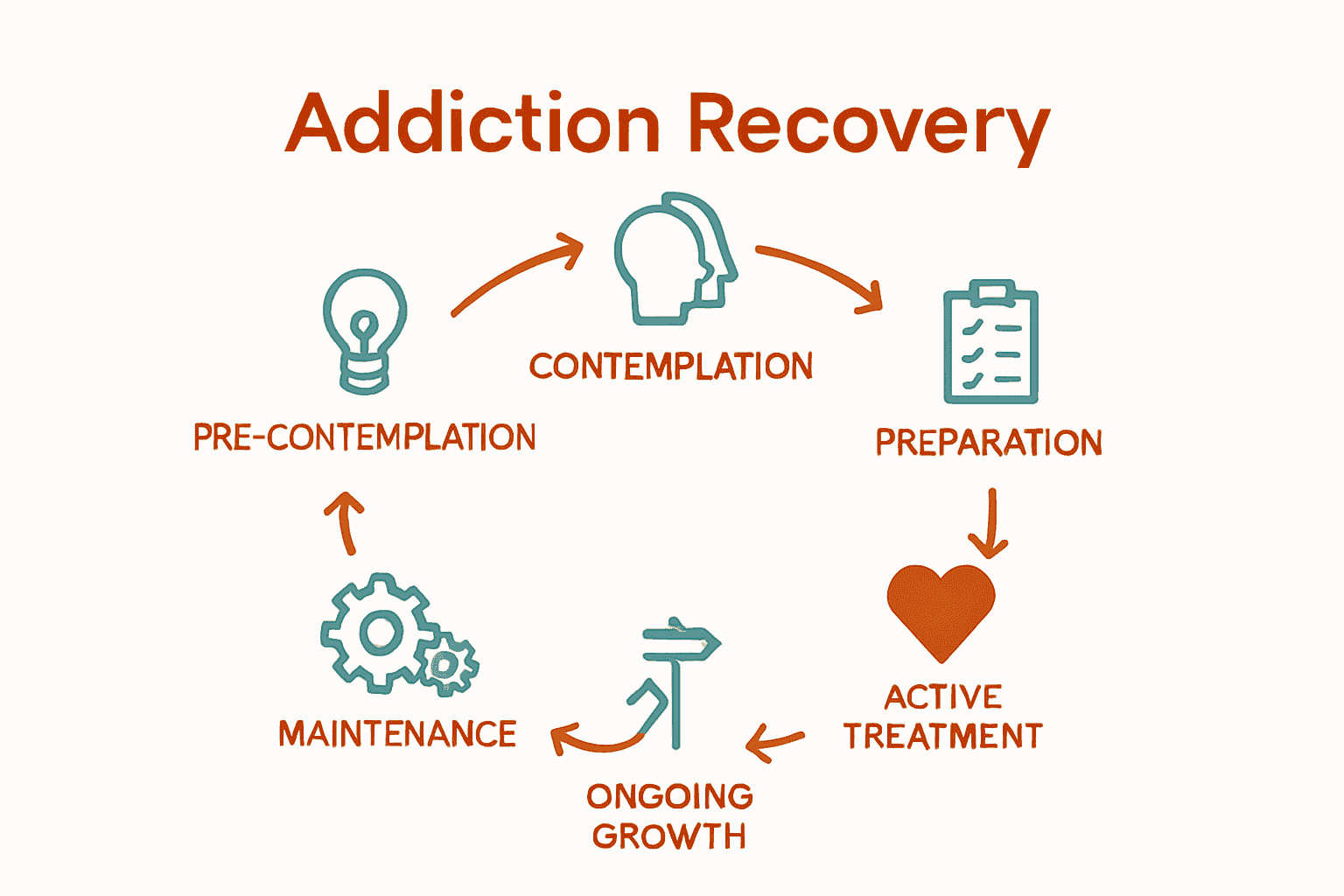
Key stages of the recovery process include:
- Pre-Contemplation: Acknowledging the existence of a substance use problem
- Contemplation: Considering the possibility of change
- Preparation: Planning concrete steps toward recovery
- Active Treatment: Engaging in structured rehabilitation and therapy
- Maintenance: Developing sustainable coping mechanisms
- Ongoing Growth: Continual personal development and relapse prevention
For those seeking comprehensive support during their recovery, understanding how rehab works can provide critical insights into navigating these complex stages. Recovery is not about achieving perfection but about making consistent, incremental progress toward holistic wellness and personal transformation.

Support Systems and Treatment Options
Navigation through addiction recovery requires a comprehensive network of support and carefully selected treatment approaches. According to the CDC, effective recovery strategies involve connecting patients with state-licensed providers, support groups, and low-cost programs that address the multifaceted nature of substance use disorders.
Support systems play a critical role in sustainable recovery, offering emotional, practical, and professional assistance throughout the healing journey. SAMHSA highlights the importance of comprehensive services that extend beyond medical treatment, including housing assistance, family counseling, child care support, and relapse prevention resources. These holistic support mechanisms recognize that recovery is not just about overcoming substance use, but rebuilding entire life structures.
Critical components of effective support systems include:
- Professional counseling and therapy
- Peer support groups
- Family and relationship counseling
- Medical and psychiatric care
- Vocational and educational support
- Financial and housing assistance
- Ongoing mental health resources
For individuals seeking comprehensive recovery support, understanding the benefits of going to rehab can provide crucial insights into creating a robust, personalized recovery strategy. Recovery is a collaborative journey that requires professional guidance, personal commitment, and a compassionate support network dedicated to long-term wellness and personal transformation.
Relapse Prevention and Warning Signs
Relapse is not a single event but a complex process of gradually returning to destructive behaviors that can undermine years of recovery progress. According to SAMHSA, effectively managing recovery requires identifying an individual’s current stage and establishing a comprehensive plan to recognize and mitigate potential relapse warning signs.
Understanding the nuanced progression of relapse involves recognizing both emotional and behavioral indicators that signal potential risk. These warning signs often emerge long before actual substance use occurs, manifesting through changes in mental state, social interactions, and personal coping mechanisms. Early detection becomes critical in interrupting the potential trajectory toward renewed substance use, allowing individuals to implement proactive intervention strategies.
Key warning signs and prevention strategies include:
- Romanticizing past substance use
- Isolating from support networks
- Experiencing significant emotional distress
- Neglecting self-care routines
- Experiencing sudden mood changes
- Abandoning structured recovery practices
- Minimizing the consequences of previous substance use
For individuals navigating the complex landscape of recovery, understanding Post-Acute Withdrawal Syndrome can provide additional insights into managing psychological challenges that might trigger potential relapse. Recovery is an ongoing journey of self-awareness, requiring continuous commitment, professional support, and personal resilience.
Resources for Families and Loved Ones
Families play a critical role in supporting individuals struggling with substance use disorders, yet navigating this challenging journey requires specialized guidance and comprehensive support. According to SAMHSA, engaging the entire family system through marriage and family counseling services is essential in effectively addressing the complex dynamics surrounding addiction.
The emotional and psychological impact of loving someone with a substance use disorder can be overwhelming, creating intricate relationship challenges that extend far beyond the individual’s direct struggle. Families often experience a range of emotions including fear, anger, guilt, and helplessness, which can inadvertently perpetuate destructive communication patterns. Recognizing these dynamics becomes crucial in developing healthy, supportive approaches that encourage recovery while maintaining personal boundaries and emotional well-being.
Key resources and support strategies for families include:
- Professional family counseling services
- Support groups for families of individuals with addiction
- Individual therapy for family members
- Educational workshops about substance use disorders
- Communication skills training
- Boundary-setting workshops
- Peer support networks
For families seeking deeper understanding of their role in the recovery process, exploring support groups for parents of addicts can provide invaluable insights and connection. Recovery is a collective journey that requires compassion, education, and consistent emotional support from all involved.
Take Charge of Your Recovery Journey Today
Overcoming addiction is a challenging and deeply personal process. This comprehensive addiction recovery checklist highlights key stages like medical assessment, detox planning, therapy engagement, and relapse prevention. If you are feeling overwhelmed by staying accountable or uncertain about which treatment path fits your unique needs, you are not alone. Many individuals struggle with maintaining structure and building support systems through every step of recovery.
At Healthy Life Recovery, we understand how critical personalized guidance and compassionate care are to success. Our comprehensive drug and alcohol rehab programs in San Diego include medically supervised detox, evidence-based therapies, and innovative treatments like TMS and qEEG brain mapping. We also offer Active Recovery Tracks such as yoga and fitness to help you nurture your whole self.
Don’t wait for relapse warning signs to become setbacks. Embrace a recovery plan designed just for you with professional support every step of the way. Explore how rehab works and discover the benefits of going to rehab through our proven continuum of care. Visit us today at Healthy Life Recovery to start building a structured path toward lasting wellness.
Frequently Asked Questions
What is an addiction recovery checklist?
An addiction recovery checklist is a structured, personalized roadmap that guides individuals through overcoming substance use disorders, helping them track progress, maintain accountability, and establish wellness goals.
What are the key components of an effective addiction recovery checklist?
Key components of an effective addiction recovery checklist typically include medical and psychological assessments, detoxification planning, treatment program selection, therapy participation, medication management, support network development, relapse prevention strategies, and ongoing health monitoring.
What are the critical stages of addiction recovery?
The critical stages of addiction recovery include pre-contemplation, contemplation, preparation, active treatment, maintenance, and ongoing growth. These stages represent a non-linear process of personal transformation and growth.
How can families support individuals in addiction recovery?
Families can support individuals in addiction recovery by engaging in professional counseling, attending support groups, participating in educational workshops, and developing effective communication and boundary-setting skills.