


Addiction recovery often sounds like nothing more than quitting drugs or alcohol, but that is just the surface. More than 20 million Americans have a substance use disorder, yet only about one in ten ever receive treatment. Think recovery is just about willpower? The real story is much bigger. Addiction recovery is a lifelong journey of transformation where healing happens across mind, body, and relationships—not just by saying no.
Quick Summary
| Takeaway | Explanation |
| Recovery is a lifelong journey | It involves ongoing personal growth beyond just stopping substance use. |
| Support systems are essential | Engaging with professionals, peers, and family enhances recovery success. |
| Relapse is part of the process | Viewing relapse as a learning opportunity helps in building resilience. |
| Develop coping mechanisms | Individuals should create strategies to handle triggers and stress. |
| Focus on holistic wellness | Address psychological, social, and physiological aspects for sustainable recovery. |
What is Addiction Recovery and Why is it Important?
Addiction recovery is a comprehensive, lifelong journey of transforming substance use disorder into sustainable personal wellness. More than simply stopping drug or alcohol consumption, recovery represents a profound process of healing physical, psychological, and social dimensions of an individual’s life.
Understanding the Core Concept
At its foundation, addiction recovery involves recognizing problematic substance use patterns and actively working to create meaningful change. Research from the National Institute on Drug Abuse reveals that recovery is not a linear path but a dynamic process of personal growth and rehabilitation.
Key elements of addiction recovery include:
- Developing self-awareness about addiction triggers
- Establishing healthy coping mechanisms
- Rebuilding personal relationships
- Creating sustainable lifestyle modifications
- Maintaining long-term mental and physical wellness
Importance of Comprehensive Recovery
Recovery transcends mere abstinence. It represents a holistic approach to rebuilding one’s life after struggling with substance use disorder. Personal transformation becomes the primary goal, where individuals learn to address underlying psychological challenges, rebuild damaged relationships, and develop new life skills.
For many individuals, recovery means rediscovering purpose and reconnecting with personal values. This journey often involves professional support, community resources, and our comprehensive treatment approaches that provide structured guidance through complex emotional and behavioral changes.
Ultimately, addiction recovery is about reclaiming control, restoring hope, and creating a fulfilling life free from the constraints of substance dependency. It is a courageous process of personal transformation that requires commitment, support, and compassionate understanding.
The Stages of the Addiction Recovery Journey
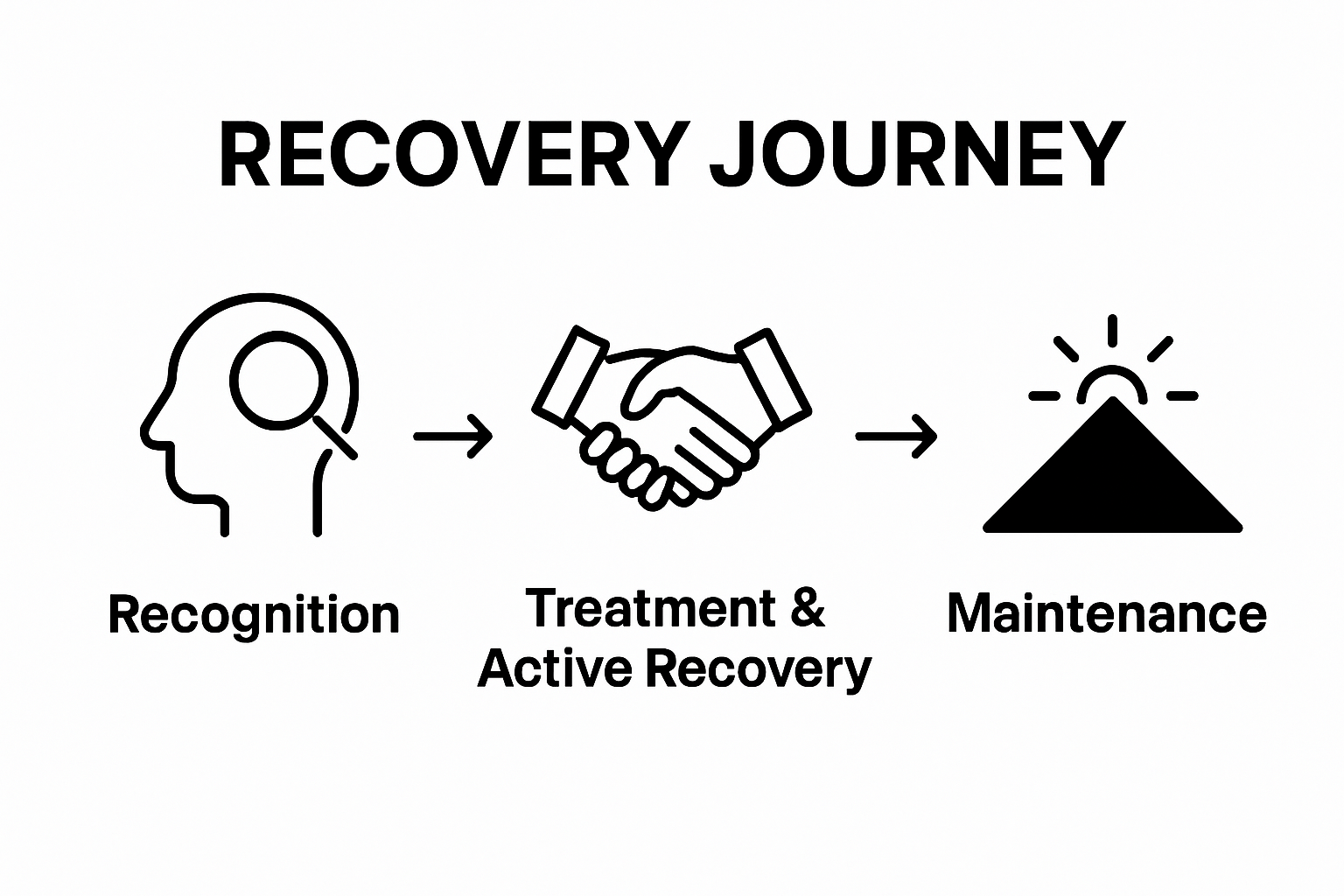
The addiction recovery journey is a complex, multifaceted process that involves distinct yet interconnected stages. Understanding these stages helps individuals recognize their progress and navigate challenges more effectively.
Initial Recognition and Commitment
Research from the National Institutes of Health highlights that the first critical stage involves acknowledging the presence of a substance use disorder. This stage requires profound self-reflection and often emerges after experiencing significant personal, professional, or health consequences.
Key characteristics of this initial stage include:
- Recognizing harmful substance use patterns
- Experiencing internal motivation for change
- Overcoming denial and resistance
- Seeking initial support or professional guidance
- Developing basic awareness about addiction’s impact
Treatment and Active Recovery
Once an individual commits to recovery, the active treatment phase begins. This stage involves comprehensive interventions designed to address physical dependency, psychological challenges, and underlying emotional triggers. Our comprehensive addiction treatment approaches provide structured support during this critical transformation.
Active recovery typically involves multiple components:
- Medical detoxification
- Individual and group therapy
- Developing coping strategies
- Addressing co-occurring mental health conditions
- Learning relapse prevention techniques
Maintenance and Long-Term Wellness
The final stage focuses on sustaining recovery and creating a fulfilling life beyond substance dependency. Maintenance is not about perfection but consistent progress and personal growth. Individuals learn to rebuild relationships, pursue personal goals, and develop resilient mental health strategies that support ongoing wellness.
Successful long-term recovery requires continuous commitment, community support, and adaptive personal strategies that evolve with changing life circumstances.
Below is a table summarizing the three primary stages of the addiction recovery journey, highlighting each stage’s core focus and typical characteristics for easier comparison.
| Stage | Core Focus | Typical Characteristics |
| Initial Recognition and Commitment | Acknowledgement of addiction, desire for change | Recognition of harmful patterns, motivation, overcoming denial |
| Treatment and Active Recovery | Intervention and support for change | Medical detox, therapy, coping strategies, addressing mental health |
| Maintenance and Long-Term Wellness | Sustaining progress, personal growth | Ongoing support, rebuilding relationships, adaptive strategies |
Common Challenges and Obstacles in Recovery
Addiction recovery is not a straightforward path but a complex journey filled with potential challenges that test an individual’s resilience and commitment. Understanding these obstacles is crucial for developing effective strategies to maintain long-term recovery.
Psychological and Emotional Barriers
Research from the National Center for Biotechnology Information reveals that psychological challenges represent significant hurdles in addiction recovery. These emotional barriers often emerge as powerful internal triggers that can potentially derail progress.
Common psychological challenges include:
- Persistent feelings of shame and guilt
- Low self-esteem and negative self-perception
- Unresolved trauma or underlying mental health disorders
- Fear of failure and potential relapse
- Deep-rooted emotional patterns associated with substance use
External Triggers and Environmental Challenges
Recovery becomes increasingly complex when individuals must navigate external environments that may compromise their healing process. Our comprehensive support guide emphasizes the importance of creating supportive networks and recognizing potential external triggers.
Significant external obstacles often involve:
- Social pressure and proximity to past substance-using environments
- Relationship dynamics and potential codependency
- Professional stress and workplace challenges
- Financial instability
- Limited access to continuous support systems
Physiological and Neurological Complications
Beyond psychological and social challenges, recovery involves managing complex physiological responses. The brain’s neurochemical adaptations during prolonged substance use create substantial obstacles in maintaining sobriety. Individuals must develop sophisticated coping mechanisms to address these intricate biological challenges.
Successful navigation of recovery requires a holistic approach that simultaneously addresses psychological, social, and physiological dimensions. Recognizing these challenges as natural parts of the healing process empowers individuals to develop robust, personalized strategies for sustained wellness.
This table organizes the main challenges faced during addiction recovery into three categories, clarifying their unique nature and providing examples for each type.
| Challenge Category | Description | Common Examples |
| Psychological and Emotional | Internal mental or emotional hurdles | Shame, guilt, low self-esteem, unresolved trauma |
| External and Environmental | Outside influences affecting recovery efforts | Social pressure, workplace stress, financial instability |
| Physiological and Neurological | Biological and physical complications | Brain chemistry changes, cravings, withdrawal symptoms |
The Role of Support Systems in Recovery
Support systems are fundamental pillars in the addiction recovery journey, providing crucial emotional, psychological, and practical assistance that significantly enhance an individual’s ability to maintain long-term sobriety. Recovery is not a solitary endeavor but a collaborative process involving multiple layers of support.
Professional and Therapeutic Support
Research from the U.S. Department of Health and Human Services emphasizes that recovery involves a comprehensive network of clinical and professional resources. These support systems are designed to address the multifaceted challenges individuals face during their rehabilitation process.
Key professional support components include:
- Individual counseling and therapy
- Psychiatrist and medical consultations
- Specialized addiction treatment programs
- Medication-assisted treatment
- Continuous clinical monitoring and intervention
Peer and Community Support Networks
Peer support represents a powerful dimension of recovery, offering individuals connection with others who have navigated similar challenges. Our comprehensive recovery support guide highlights the transformative potential of community-based support mechanisms.
Essential community support elements encompass:
- 12-step program participation
- Mutual aid groups
- Recovery support meetings
- Sober living communities
- Online and in-person support networks
Family and Personal Support Dynamics
Family and personal relationships play a critical role in sustainable recovery. Rebuilding trust, establishing healthy communication patterns, and creating supportive home environments are essential for long-term success. Recovery is not just about the individual but involves healing entire relational ecosystems.

Successful recovery emerges from a holistic support approach that simultaneously addresses clinical, social, and personal dimensions. By creating robust, compassionate support networks, individuals can develop the resilience necessary to overcome addiction and cultivate meaningful, substance-free lives.
Understanding Relapse and Its Place in Recovery
Relapse is not a singular event but a complex process that represents a critical component of the addiction recovery journey. Recognizing relapse as a potential opportunity for growth and learning, rather than a definitive failure, is essential for sustainable recovery.
Defining Relapse in Recovery Context
Research from the National Center for Biotechnology Information reveals that relapse is a common occurrence in addiction recovery, with rates comparable to other chronic health conditions. Understanding relapse requires a nuanced perspective that goes beyond simple binary concepts of success and failure.
Key characteristics of relapse include:
- A gradual process of returning to substance use
- Triggered by specific psychological or environmental factors
- Often preceded by identifiable warning signs
- Potentially revealing gaps in current recovery strategies
- An opportunity for renewed commitment and intervention
Psychological and Emotional Dynamics of Relapse
Relapse involves complex psychological mechanisms that extend far beyond the act of substance consumption. Our comprehensive recovery support guide emphasizes the importance of understanding the underlying emotional triggers and thought patterns that contribute to potential setbacks.
Critical emotional factors associated with relapse include:
- Unresolved emotional trauma
- Persistent negative self-perception
- Inadequate coping mechanisms
- Overwhelming stress or emotional challenges
- Loss of motivation or hope
Proactive Relapse Prevention Strategies
Successful recovery involves developing robust, personalized strategies that anticipate and mitigate potential relapse risks. This approach transforms relapse from a potential endpoint into a moment of renewed learning and personal growth. Individuals can build resilience by creating comprehensive prevention plans that address psychological, social, and environmental factors.
Effective recovery is not about achieving perfect abstinence but about developing the skills, support systems, and self-awareness necessary to navigate challenges with increasing confidence and effectiveness.
Ready to Transform Your Recovery Journey with Real Support?
If you have ever struggled with repeated setbacks, overwhelming triggers, or the challenges of navigating addiction recovery alone, you are not alone. The journey is rarely a straight path. Real change happens with expert guidance, evidence-based care, and genuine connection—just like you read about in our article on personal transformation and support systems. At Healthy Life Recovery, we understand how vital it is to address both the emotional and physical hurdles of addiction. Our comprehensive approach to addiction treatment includes medically supervised detox, innovative therapies, and unique opportunities like surfing and fitness to help you rebuild every part of your life.
Take the next step right now. Explore our programs or reach out for a supportive conversation. Every stage of your recovery is important. Let us help you experience true healing in San Diego today.
Frequently Asked Questions
What is addiction recovery?
Addiction recovery is a comprehensive, lifelong journey that focuses on transforming substance use disorder into sustainable personal wellness. It involves more than just stopping substance use; it encompasses healing physical, psychological, and social aspects of an individual’s life.
What are the stages of the addiction recovery journey?
The stages include: 1) Initial Recognition and Commitment, where individuals acknowledge their substance use disorder; 2) Treatment and Active Recovery, which involves interventions to address dependency; and 3) Maintenance and Long-Term Wellness, focusing on sustaining recovery and achieving personal growth.
What common challenges do people face during recovery?
Common challenges include psychological barriers like shame and guilt, external triggers such as social pressure, and physiological complications from the addiction itself. Understanding these obstacles is essential for developing effective strategies for recovery.
How do support systems aid in the addiction recovery process?
Support systems provide emotional, psychological, and practical assistance, enhancing an individual’s ability to maintain long-term sobriety. This includes professional support, peer networks, and family dynamics that foster a compassionate and encouraging environment.