

Trazodone is often prescribed to people struggling with depression, anxiety, or trouble sleeping. Most medications that work on the brain carry a risk of addiction or other complications, yet trazodone bucks the trend. In fact, medical studies show that trazodone is non-narcotic and non-addictive, even for those with a history of substance use disorder, making it a surprising outlier in the world of mental health treatment.
Quick Summary
| Takeaway | Explanation |
|---|---|
| Trazodone is effective for depression | It is primarily prescribed to treat major depressive disorders and improve emotional stability. |
| Non-addictive medication | Trazodone does not produce euphoric effects or lead to physical dependency, making it safer for many patients. |
| Helps with sleep and anxiety | Beyond depression, it also addresses insomnia and anxiety-related sleep disturbances effectively. |
| Personalized treatment approach | Healthcare professionals can tailor dosage plans to meet individual patient needs, enhancing treatment efficacy. |
| Useful for those with substance use disorder | Its low potential for abuse makes trazodone an ideal choice for patients recovering from substance use disorders. |
What is Trazodone and Its Uses?
Trazodone is a prescription medication primarily used to treat depression and mental health conditions. Unlike narcotic substances, it is an antidepressant belonging to a unique class of medications called serotonin antagonist and reuptake inhibitors (SARIs). Medical researchers classify trazodone as a non-addictive pharmaceutical intervention designed to address complex mental health challenges.
Understanding Trazodone’s Mechanism
The medication works by modulating serotonin levels in the brain. Serotonin is a neurotransmitter responsible for regulating mood, emotional stability, and mental well-being. When someone experiences depression, their brain might have imbalanced serotonin production. Trazodone helps restore this balance by preventing serotonin reabsorption and increasing its availability in neural pathways.
Key characteristics of trazodone include:
- Designed to treat major depressive disorders
- Helps improve mood and emotional regulation
- Can reduce anxiety and sleep disturbances
- Non narcotic and non habit forming
Clinical Applications and Uses
Healthcare professionals prescribe trazodone for various mental health conditions beyond traditional depression treatment. Clinical guidelines suggest its effectiveness in managing:
- Major depressive disorder
- Anxiety-related sleep disruptions
- Insomnia associated with mood disorders
- Potential treatment for post-traumatic stress disorder
Unlike narcotics, trazodone does not produce significant euphoric effects or create physical dependency. Its primary goal is to stabilize mood and improve overall mental health functioning. Patients should always consult with healthcare professionals to determine the most appropriate treatment plan tailored to their specific medical needs.
Understanding Narcotics: Definitions and Classifications
The term “narcotic” has complex legal, medical, and societal implications that extend far beyond its common understanding. Drug enforcement officials define narcotics specifically as substances derived from opium or synthetic compounds that produce similar physiological effects, primarily focusing on opioid medications and illicit drugs that have significant potential for addiction and abuse.
Legal and Medical Classification
Narcotics are strictly regulated due to their high potential for dependency and significant health risks. The legal classification typically involves a comprehensive evaluation of several critical factors:
- Potential for physical and psychological addiction
- Ability to produce pain relief and sedative effects
- Risk of severe withdrawal symptoms
- Potential for overdose and life-threatening complications
Medical professionals distinguish narcotics from other controlled substances by their specific chemical structures and interactions with the human nervous system. These substances primarily work by binding to opioid receptors in the brain, which can produce pain relief, euphoria, and potentially dangerous respiratory depression.
Types of Narcotic Substances
Narcotic substances can be broadly categorized into several distinct groups, each with unique characteristics and regulatory considerations:
- Natural Opiates: Directly extracted from opium poppy, including morphine and codeine
- Synthetic Opioids: Chemically manufactured compounds like fentanyl and methadone
- Semi-Synthetic Opioids: Derived from natural opiates but chemically modified, such as heroin and oxycodone
Understanding these classifications helps healthcare providers, law enforcement, and individuals recognize the complex nature of narcotic substances and their potential risks.
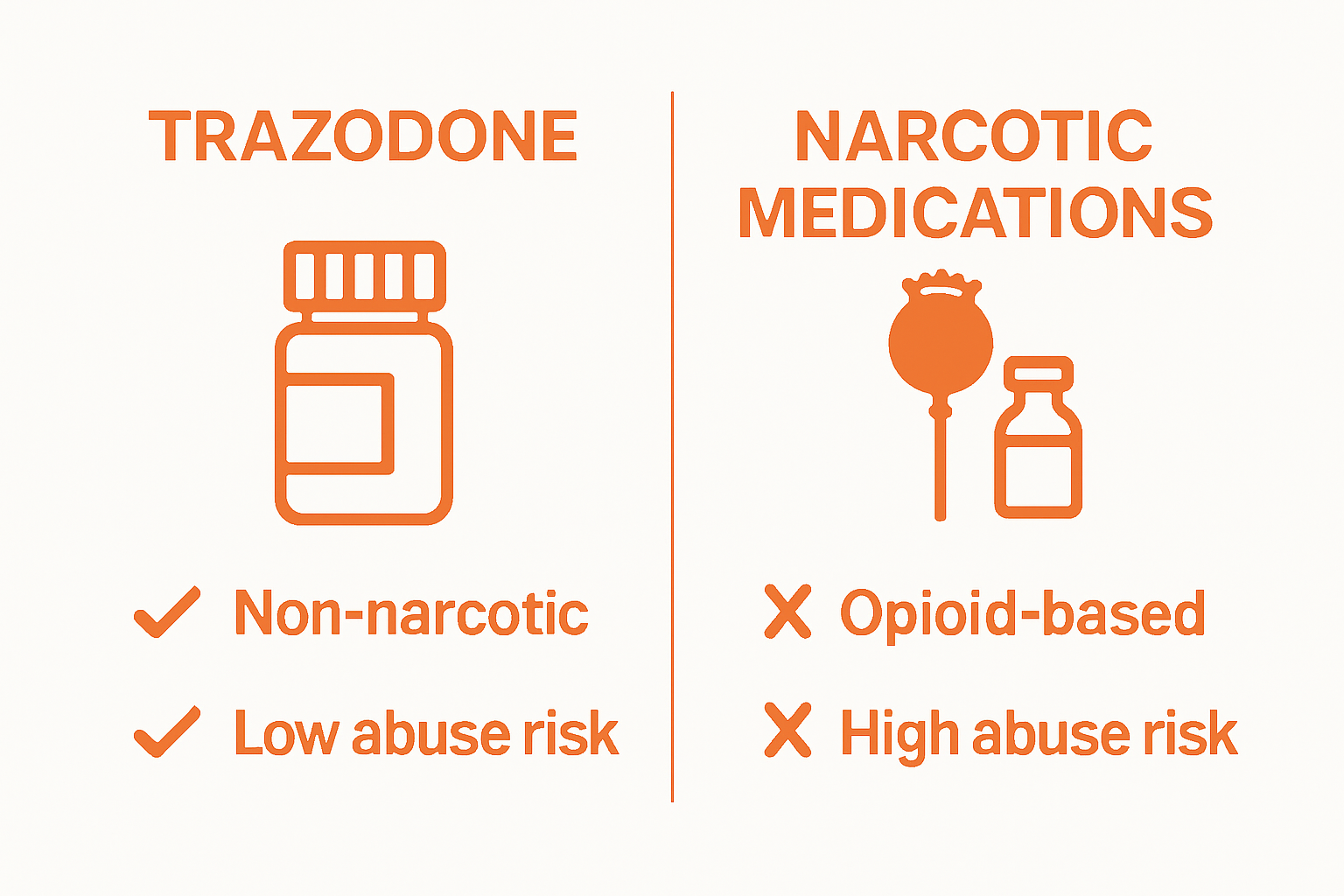
Below is a table comparing key characteristics of trazodone and narcotic substances to clarify their differences and help readers understand their distinct roles in treatment.
| Characteristic | Trazodone | Narcotic Substances |
|---|---|---|
| Primary Use | Treats depression, anxiety, and insomnia | Pain relief, often for acute or chronic pain |
| Chemical Classification | Serotonin antagonist and reuptake inhibitor (SARI) | Opioids (natural, semi-synthetic, synthetic) |
| Addiction Potential | Non-addictive, low risk of physical dependency | High risk of addiction and dependency |
| Euphoria/“High” Produced | No | Yes, commonly produces euphoria |
| Legal Regulation Status | Prescription only, not a controlled substance | Strictly regulated as controlled substances |
| Withdrawal Risk | Low | High |
| Use in SUD Recovery | Considered safe for people with SUD | Generally avoided due to risk of abuse |
How Trazodone Affects the Brain and Body
Trazodone is a sophisticated pharmaceutical intervention that interacts with the brain’s complex neurochemical systems to address mental health challenges. Neurological research demonstrates that this medication primarily works by modulating serotonin levels and receptor interactions, creating a nuanced approach to treating depression and associated symptoms.
Neurochemical Mechanisms
At its core, trazodone functions by targeting specific neurotransmitter pathways. The medication acts as a serotonin antagonist and reuptake inhibitor, which means it blocks certain serotonin receptors while simultaneously preventing the reabsorption of serotonin in the brain. This dual action helps stabilize mood and improve emotional regulation by increasing the availability of serotonin in neural synapses.
Key neurological interactions include:
- Blocking specific serotonin receptors
- Inhibiting serotonin reuptake
- Modulating neural communication pathways
- Reducing symptoms of depression and anxiety
Physiological Effects and Response
The body responds to trazodone through a series of complex interactions that extend beyond simple neurotransmitter manipulation. Patients may experience a range of physiological responses as the medication begins to take effect. These responses can include improved sleep patterns, reduced anxiety, and enhanced emotional stability.
Potential physiological responses encompass:
- Sedative effects that promote sleep
- Reduction in anxiety symptoms
- Improved mood regulation
- Potential changes in appetite and energy levels
Healthcare professionals carefully monitor individual patient responses, recognizing that each person may experience the medication differently. The goal is to achieve optimal mental health outcomes while minimizing potential side effects through personalized treatment approaches.
This table summarizes the main therapeutic effects and physiological responses of trazodone, highlighting both its neurochemical actions and its impact on patients.
| Effect or Response | Description |
|---|---|
| Increases serotonin availability | Blocks serotonin reuptake to stabilize mood |
| Blocks certain serotonin receptors | Reduces symptoms of depression and anxiety |
| Sedative effects | Promotes improved sleep and reduces insomnia |
| Reduces anxiety | Supports emotional balance and relaxation |
| Mood regulation | Enhances coping with major depressive disorders |
| Potential appetite and energy changes | May subtly alter appetite or energy levels |
Why the Classification Matters for Those with SUD
For individuals struggling with substance use disorder (SUD), medication classification becomes critically important in treatment planning and recovery. Medical research highlights that understanding the pharmacological properties of medications like trazodone can significantly impact treatment safety and effectiveness.
Risk Assessment and Treatment Considerations
People with a history of substance use disorder require carefully selected medications that minimize potential addiction risks. Trazodone stands out as a medication with unique characteristics that make it particularly suitable for individuals in recovery. Unlike narcotic substances, trazodone does not produce euphoric effects or create physical dependency, which reduces the likelihood of potential misuse.
Key considerations for SUD patients include:
- Low potential for substance abuse
- No significant euphoric or reinforcing effects
- Minimal risk of developing physical dependency
- Ability to address co-occurring mental health conditions
Therapeutic Benefits for Recovery
For individuals in recovery, trazodone offers multiple therapeutic advantages. The medication can effectively address common co-occurring conditions such as depression and sleep disorders without introducing additional addiction risks. Healthcare professionals often view trazodone as a safer alternative to more potentially habit-forming medications.
Significant therapeutic benefits include:
- Managing depression symptoms
- Improving sleep quality
- Supporting overall mental health stability
- Reducing anxiety without addiction potential
Understanding medication classification empowers individuals with SUD to make informed decisions about their treatment. By choosing medications with low abuse potential, patients can focus on their recovery journey while effectively managing underlying mental health challenges.

Real-World Implications: Trazodone in Treatment
Trazodone represents a significant breakthrough in mental health treatment, offering unique advantages for patients dealing with complex psychological challenges. Medical research demonstrates its versatility in addressing multiple mental health conditions while maintaining a low risk of dependency.
Practical Treatment Applications
Healthcare providers frequently prescribe trazodone for a range of clinical scenarios beyond traditional depression treatment. Its flexible pharmacological profile allows clinicians to address multiple symptoms simultaneously, making it an invaluable tool in comprehensive mental health management. Patients with concurrent conditions like depression, anxiety, and sleep disorders can benefit from its multifaceted therapeutic approach.
Key practical treatment applications include:
- Managing major depressive disorders
- Addressing insomnia and sleep disruptions
- Treating anxiety-related symptoms
- Supporting patients with complex mental health needs
Patient-Centered Treatment Strategies
The medication’s unique characteristics enable personalized treatment strategies that prioritize patient safety and comfort. Unlike narcotic medications, trazodone allows for more nuanced dosage adjustments and lower risks of adverse reactions. Healthcare professionals can tailor treatment plans more precisely, considering individual patient needs, medical history, and specific symptom profiles.
Significant patient-centered benefits encompass:
- Minimal risk of substance dependency
- Reduced side effect profiles
- Greater flexibility in treatment planning
- Enhanced patient autonomy in mental health management
By offering a comprehensive yet gentle approach to mental health treatment, trazodone represents an important advancement in pharmaceutical intervention. Its ability to address multiple symptoms while maintaining patient safety makes it a critical tool in modern psychiatric care.
Find Safe, Supportive Care for Substance Use and Mental Health Needs
If you are struggling with both addiction and mental health questions like the difference between medications such as trazodone and narcotics, you are not alone. Navigating the complexities of treatment can be overwhelming, especially when you are unsure which medications are safe during recovery. The article above highlights how important it is to choose therapies and medications that keep your well-being and sobriety as the first priority. Many readers want reassurance that their care plan will not put them at risk for more harm.
Healthy Life Recovery provides an integrated approach that puts safety, medical guidance, and lasting support at the center of your journey. Our programs address co-occurring challenges—and our team offers medically supervised detox, innovative evidence-based therapies, and holistic support for both substance use and mental health concerns. Ready to take the next step toward a balanced, healthy life free from addiction? Visit Healthy Life Recovery today to connect with our compassionate team, learn more about our full continuum of care, and move forward with confidence. Your path toward healing starts with the right information and the right support—reach out now.
Frequently Asked Questions
Is trazodone considered a narcotic?
Trazodone is not classified as a narcotic. It is an antidepressant that belongs to a class of medications called serotonin antagonist and reuptake inhibitors (SARIs), which do not have the addiction potential typically associated with narcotics.
What conditions can trazodone be used to treat?
Trazodone is primarily used to treat major depressive disorder, anxiety-related sleep disruptions, insomnia associated with mood disorders, and may also be a potential treatment for post-traumatic stress disorder (PTSD).
How does trazodone work in the brain?
Trazodone works by modulating serotonin levels and receptor interactions in the brain. It acts as a serotonin antagonist and reuptake inhibitor, increasing serotonin availability in neural pathways to stabilize mood and improve emotional regulation.
What are the benefits of trazodone for individuals with substance use disorder (SUD)?
Trazodone offers several benefits for individuals with SUD because it has a low potential for abuse, does not produce euphoric effects, and can effectively manage co-occurring conditions like depression and anxiety without creating physical dependency.