
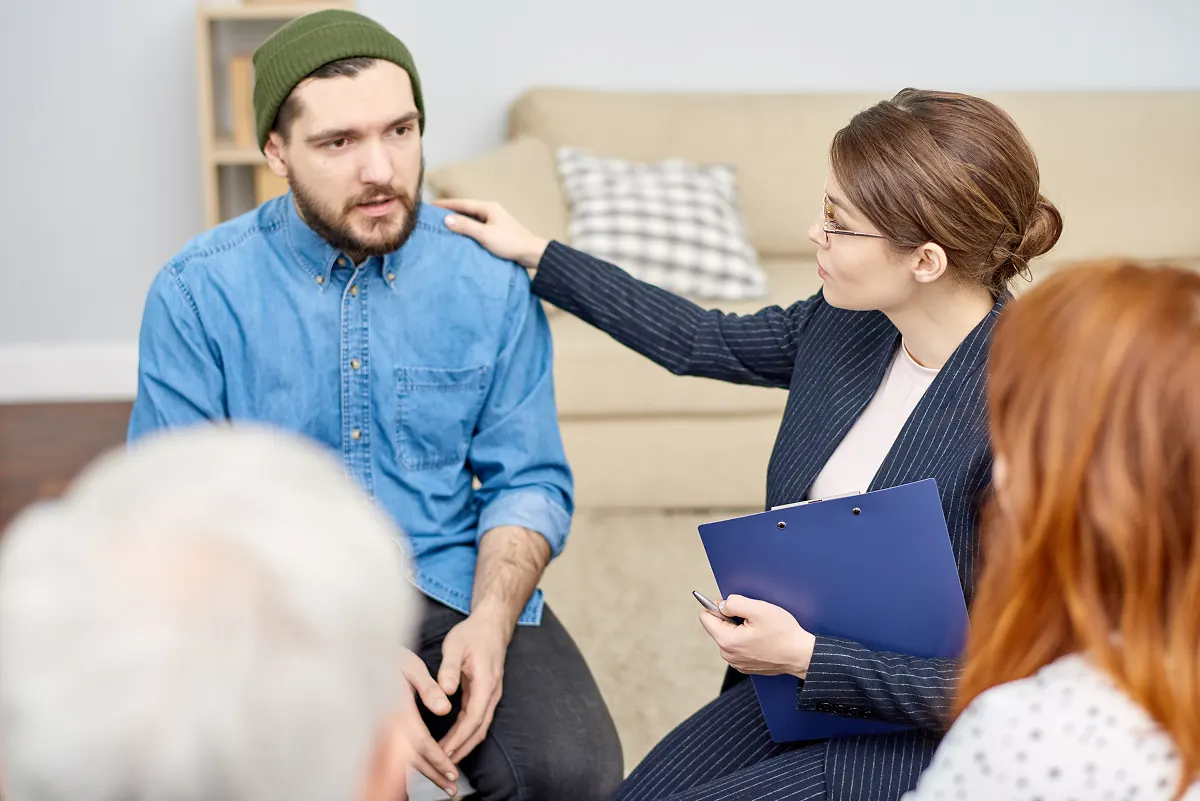
At Healthy Life Recovery, our outpatient rehab in San Diego is built for people who are serious about long-term sobriety and need a program that fits around real life — work schedules, family obligations, and daily commitments. Whether you are stepping down from medically supervised detox or beginning treatment for the first time, our outpatient programs provide the clinical structure and flexibility to support lasting recovery.
We offer a full spectrum of outpatient levels of care, matched to each client’s clinical needs and circumstances. Every treatment plan is designed by licensed clinicians and a board-certified psychiatric team, and supported by medication-assisted treatment where clinically appropriate. Clients transitioning out of higher levels of care can also access our sober living partners in San Diego, providing a stable, substance-free environment while they move through outpatient programming.
Outpatient treatment is not a single program — it’s a spectrum of intensity designed to match where each client is in their recovery.

The transition from a more structured treatment environment back into daily life is one of the highest-risk periods in early recovery. Research consistently shows that ongoing structured care during this window — particularly the first 90 days following detox or residential treatment — dramatically improves long-term outcomes. Studies suggest that approximately 60% of people who complete inpatient or residential treatment without ongoing outpatient care will experience a relapse in the first year.
Outpatient rehab keeps clients engaged with clinical support and a sober community precisely during the period when resuming work, navigating family dynamics, and returning to familiar environments poses the greatest relapse risk. Clients in our intensive outpatient program continue building coping skills in a clinical setting while applying them in real time in their actual lives — a combination that accelerates recovery in a way that purely residential treatment cannot.

Many clients struggle with progression out of treatment settings. The stress of resuming work, family reintegration, and being back in familiar locations and situations can be major risk factors for addicts in early recovery. Intensive outpatient rehabs can be a regular touchstone to remain engaged and focused on recovery during this period. Clients continue to learn effective coping mechanisms in intensive outpatient rehab and have a direct opportunity to start applying these skills as they begin to function in their day-to-day lives.

Intensive outpatient programs will typically meet during the weekdays. Many treatment facilities offer daytime, as well as evening programs, that require sessions lasting for a few hours. During the scheduled meeting time, patients will meet with groups and have breaks in between each session. Common types of group sessions for an IOP include:
The therapies used in IOP include:
Inpatient treatment is a more extensive approach to addiction treatment. Also known as residential care, inpatient treatment provides around-the-clock care by medical professionals in a non-hospital setting. It does not possess the same flexibility as an outpatient treatment program.
People who will more likely benefit from an inpatient program are those who are physically dependent on their substance of choice. Additionally, an individual who does not have a reliable support system in their home environment would also be a good candidate. The choice ultimately comes down to the patient’s situation and should be a joint decision with an addiction specialist.


Posted on GoogleTrustindex verifies that the original source of the review is Google. I am a recent client just retuning home from Healthy Life Recovery in San Diego, California. My intention was to stay only 30 days, however, I stayed almost one year. The staff is extremely knowledgeable and kept me engaged. I stayed at two sober living homes throughout my stay and they were both very clean and nice. The treatment and therapy I received was also quite helpful. I am sober today because Healthy Life allowed me to grow. I have found a new passion for life and will Forever, be grateful.Posted on GoogleTrustindex verifies that the original source of the review is Google. I’m very grateful to Healthy Life Recovery for the amazing help given to me on my sobriety journey. I’ve spent years fighting childhood trauma and with the help of my wonderful therapist, Rachel I’ve been able to move past it. I can’t thank enough the owners Ryan & Keith, the Clinical Director Dr. Bonnie or the outstanding staff. The HLR staff are a wonderful bunch of kind people who really care about others success at long term sobriety. They were fortunate enough to survive this disease and they want you or your loved one to survive too. If you are looking to get sober and Stay Sober Healthy Life will get you and Keep You There!Posted on GoogleTrustindex verifies that the original source of the review is Google. I had been struggling with some major mental issues since August of 2024, which is when I admitted myself into a mental health facility for six nights and seven days in the San Fernando Valley. I wasn't able to get the proper after care treatment in Los Angeles due to Red Tape and lack of facilities. I reached out to Mädchen Amic who is the Founder/President of the Don't Mind Me Foundation in Palm Springs, Ca.I worked with her on Twin Peaks , Then Twin Peaks:The Return, and knew about her Foundation, and let her know my current situation. She was aware my past struggles. She contacted Keith Blanenship, who is the Executive Director at Healthy Life Recovery in San Diego,Ca.Within minutes, Keith contacted me. After a few minutes on then phone, He invited me down to check out their programs and facilities. The next day I drove down and was greeted by Keith. He gave me a guided tour of their operations. I was then introduced to Bonnie Mitchell, who is the Clinical Director at Healthy Life Recovery.Within seconds, I knew I had found the right home to get the help needed.What I didn't realize is that Mädchen had arranged a sponsorship thru The Don't Mind Me Scholarship Fund. I checked in two days later and had my Intake meeting with Bonnie. When that ended, I was then sent to my house I would be living at for a undecided amount of time. I want to thank Jody (House Captain) and my other six roommates who made me feel welcome and relaxed during my stay. My day consisted of four classes, medical checkups and weekly one on ones with Bonnie. Weekend events such as giving back to the community (Trash Clean Ups, Graffiti Removal), Hiking, Kickball, Volleyball, Softball, Canoeing are just some of the weekend events provided. After three weeks I felt I was ready to get back home, which was a tough decision because I enjoyed every second of my experience at Healthy Life Recovery. I am am now on their Out Patient program which includes daily assignments, Telehealth appointments and in person appointments with them once a month.I enjoy having the opportunity to still be involved with Healthy Life Recovery. I am now part of their Alumni Group, which means I can share my story with people with the same issues I have, and to inspire them the way I have been. I want to thank all of the staff and fellow clients at Healthy Life recovery. for helping me getting my life back on track.Posted on GoogleTrustindex verifies that the original source of the review is Google. I definitely wanted to add a positive review from my time at Healthy Life. Recently finished my program and I am cannot say enough good things about their program or “community” of staff / clients / owners. Like many, I have been in many rehabs and sober living houses and almost always felt like a number or just money for the programs. I came out to California for rehab and everyone there served as a secure replacement for family at home. To my surprise, I found nearly everything from their groups, community outings, individual therapy, and options for exercise / MMA training the perfect combination for myself. Added, I have sat through endless rehab groups over the years and basically watched the clock for them to end. Healthy Life’s groups and therapy actually sunk into my stubborn head. The therapists / case managers / group facilitators are very knowledgeable and organized with goals to better you emotionally and physically. Anyways, I will always be grateful for my time in their program, something I cannot say for most of my rehab experiences.Posted on GoogleTrustindex verifies that the original source of the review is Google. Healthy life saved my life and I am so grateful to them. The staff were super understanding and compassionate. I was able to process and accept a lot of my life through individual therapy as well as group therapy with my peers.Posted on GoogleTrustindex verifies that the original source of the review is Google. Healthy Life Recovery is place to recover, change your life, and make connections with people trying to do the same thing. There are sober housing options as well. Basically Healthy Life is a key into a fantastic recovery community, as well as the knowledge you walk away with. They really teach you "how to fish sober" at this place. Big shout out to all the staff as well everyone I met really fostered growth. THANK YOU HEALTHY LIFE.Posted on GoogleTrustindex verifies that the original source of the review is Google. I’ve been deeply grateful for the benefits I received from their program. The group sessions bring together individuals from very diverse backgrounds, often creating powerful spaces for vulnerability, insight, and moments of real healing. That said, true recovery begins when you make a wholehearted commitment to yourself and take full accountability for your journey. After all, you’re the only one who is with yourself 24/7. During the group sessions, be honest and open. Listen not only to the facilitators, but also to your fellow peers—everyone has something valuable to offer, especially when the group is engaged and present. Healing is possible—and it begins with you. Good luck!Posted on GoogleTrustindex verifies that the original source of the review is Google. I went to HLR for a year and it is hands down the best program in SD. The staff go above and beyond for the clients and truly care about their well being. I would recommend HLR to anyone looking to get better.

Dr. John Allen, MD is a psychiatrist in El Cajon, CA and has over 45 years of experience in the medical field. Dr. Allen has extensive experience in Addiction & Substance Abuse and Psychotic Disorders. He graduated from Baylor University in 1976.